Digital dental rehabilitation support

Dental
Solutions

Digitally planned and precisely fabricated components for functional and aesthetic dental rehabilitation.

Before you submit a case

Imaging & data requirements

How to acquire the CBCT and intraoral scan we need for digital dental planning — our requirements from your side, on one printable sheet.

Download PDF
01 · Planning scope

From Dental Scan to Surgical Transfer

Dental solutions combine the intraoral (dental) scan with CT or CBCT imaging to plan the final result first, the implant position or the bite, then turn that plan into a guide or splint that fits the patient's teeth precisely.

The clinical endpoint drives the design: in implant dentistry the planned tooth position sets the implant angle, and for occlusal appliances the planned bite and tooth contacts define the splint.

Planning variables
Registration
alignment of dental scan and CT or CBCT data
Fit
stable seating on teeth or bone supported regions
Axis
planned drilling direction and implant position
Occlusion
contact pattern and bite relation control
Output
manufacturing ready guide, splint, or protocol
02 · Dental solutions

Implant Drilling Guides and Michigan Splints

The same planning environment produces both implant drilling guides and occlusal splints. Each design is checked for seating, clinical access, and manufacturability before output.

Implant dentistry

Implant drilling guide

An implant drilling guide transfers the planned implant axis into surgery. The guide is designed from the dental scan and radiological anatomy so that the sleeve position follows the prosthetic target while respecting bone volume and anatomical limits.

The design can include tooth supported seating, drilling sleeves, inspection windows, and support surfaces for a predictable intraoperative position.
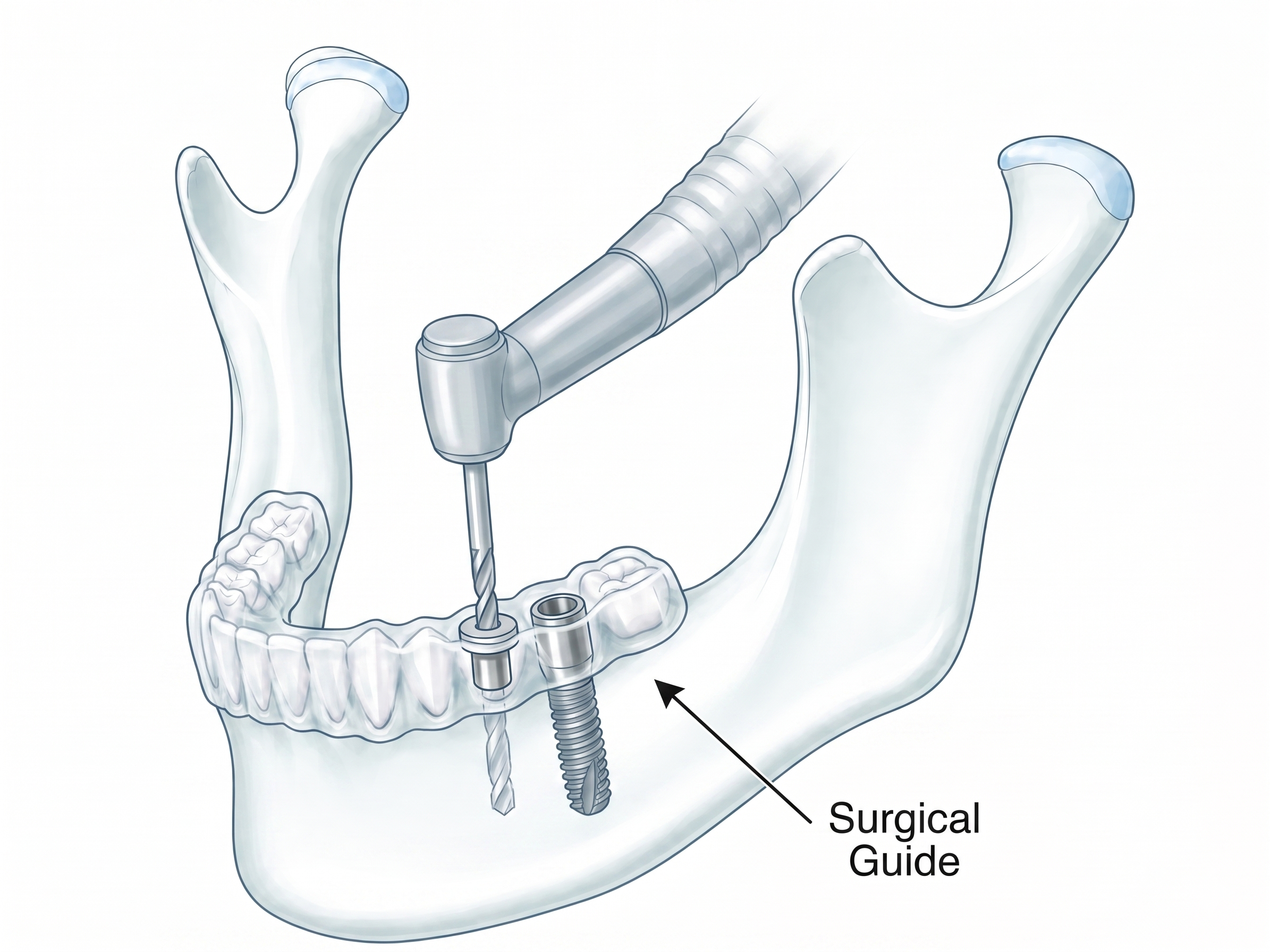
Mandibular implant drilling guide with sleeve and drill
Implant drilling guide
Occlusal appliance

Michigan splint

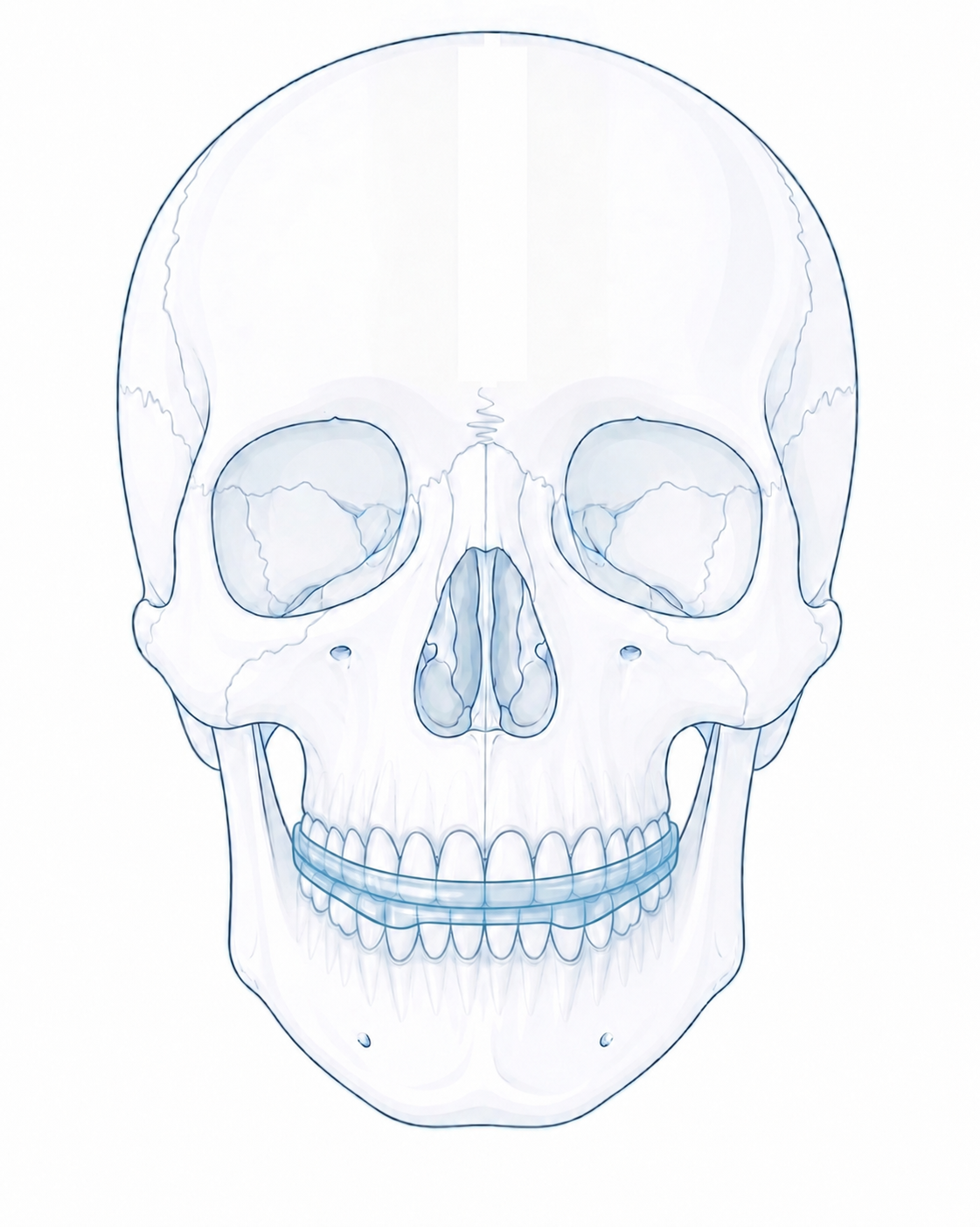
A Michigan splint is designed on the dental arch to create a controlled occlusal surface. The appliance can support stabilization, bite registration, and functional evaluation depending on the clinical indication.

Digital planning allows the splint outline, thickness, retention, and occlusal contacts to be adjusted before manufacturing.

Frontal skull with transparent Michigan splint on the dental arches
Michigan splint
03 · Design logic

Plan the Device Around the Clinical Target

The design is not limited to a printable object. The relevant anatomy, prosthetic target, seating surface, and intraoperative access are planned together.

Data alignment

Dental scan data and radiological anatomy are matched so that tooth surfaces, bone volume, and planned components share one coordinate system.

Controlled seating

The contact surface is shaped to help the guide or splint seat in a defined position without rocking or ambiguous placement.

Manufacturing output

The final file is prepared for production with the required wall thickness, access geometry, and documentation for clinical use.

READY WHEN YOU ARE

Submit a case, receive a plan.

Send the patient's CT and dental scan through our secure channel. A planning proposal is typically returned within 2–5 working days, case-dependent.