Aesthetic and reconstructive contouring

Patient Specific
Onlays

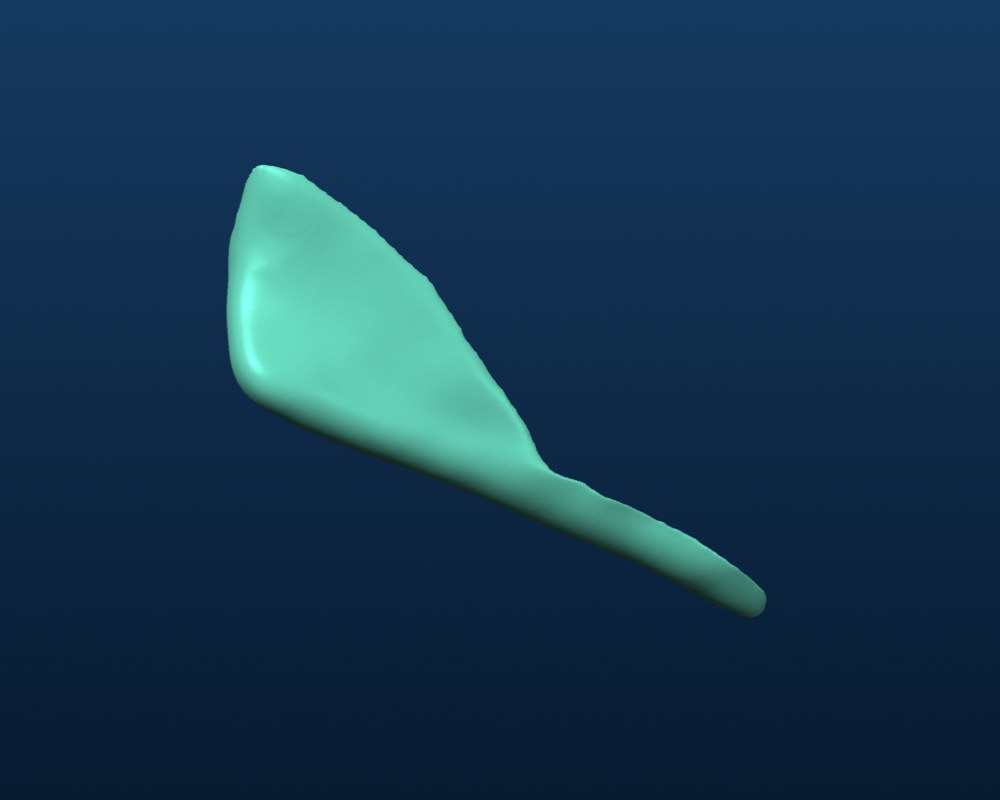
Custom facial onlay implants for mandibular contouring, malar projection, orbital rim definition, asymmetry correction, and contour restoration.

Before you submit a case

Imaging & data requirements

How to acquire the CT/CBCT we need for an accurate onlay design — our requirements from your side, on one printable sheet. No dental scan required.

Download PDF
01 · The procedure

What Onlay Implants Do

An onlay is a custom implant that adds contour to the facial skeleton without cutting or moving the bone beneath it. Shaped to the patient's own anatomy, it sits on the bone like a precise extension of it and is fixed in one defined position.

The goal is not a generic volume added to the face. Shape, thickness, edge blending, and screw position are planned together so the implant reads as part of the bone, with no visible or palpable step at the margins.

Planning variables
Projection
anterior, lateral, or inferior volume gain
Contour
smooth transition into the native skeleton
Symmetry
mirroring or bilateral aesthetic target design
Fixation
screw corridors placed outside critical anatomy
Access
implant shape adapted to the surgical approach
02 · Onlay families

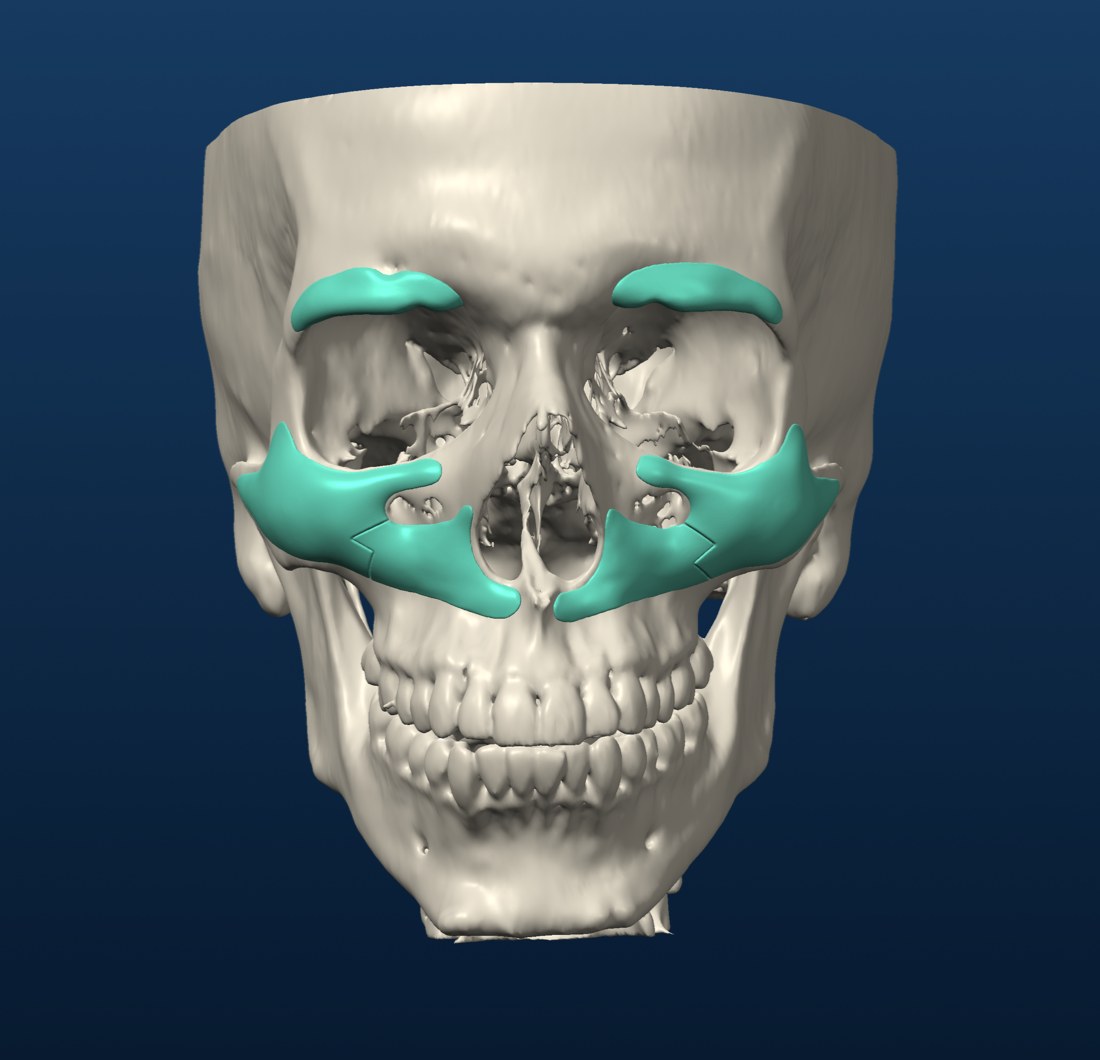
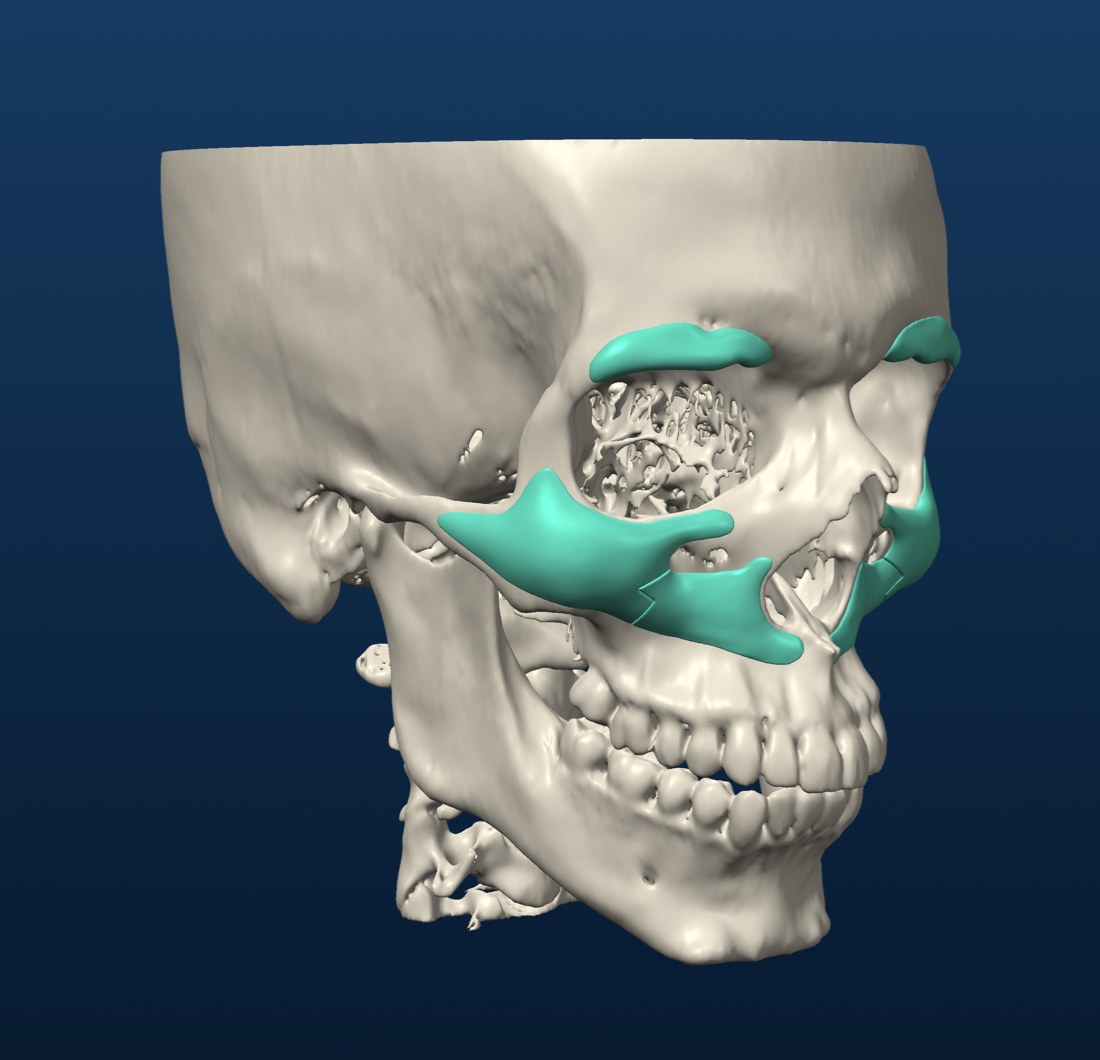
Mandible, Malar Region, and Supraorbital Rim

Each onlay family follows the same planning logic. The implant is shaped to the patient, the transition zones are thinned, and the visible contour is controlled from clinically relevant views.

Mandible

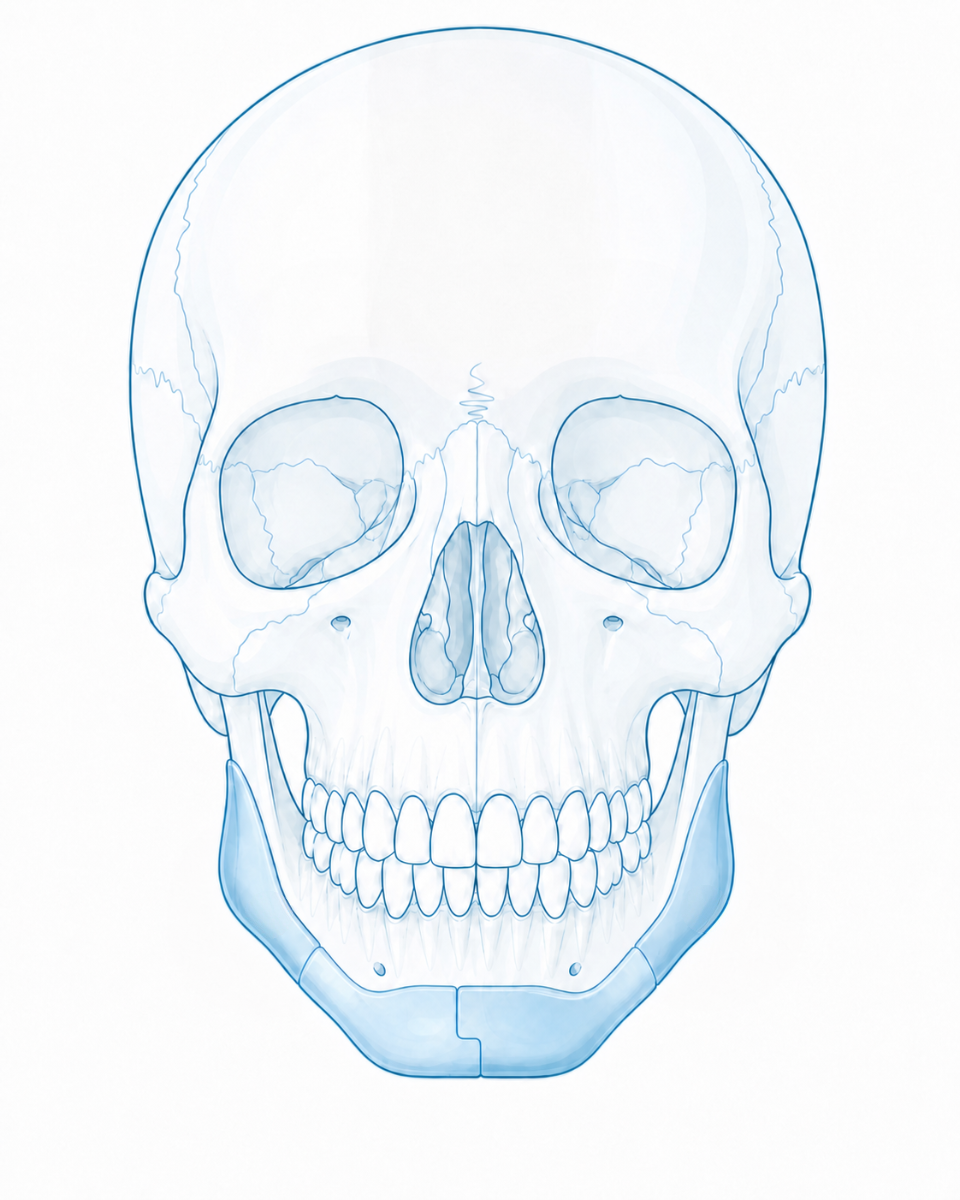
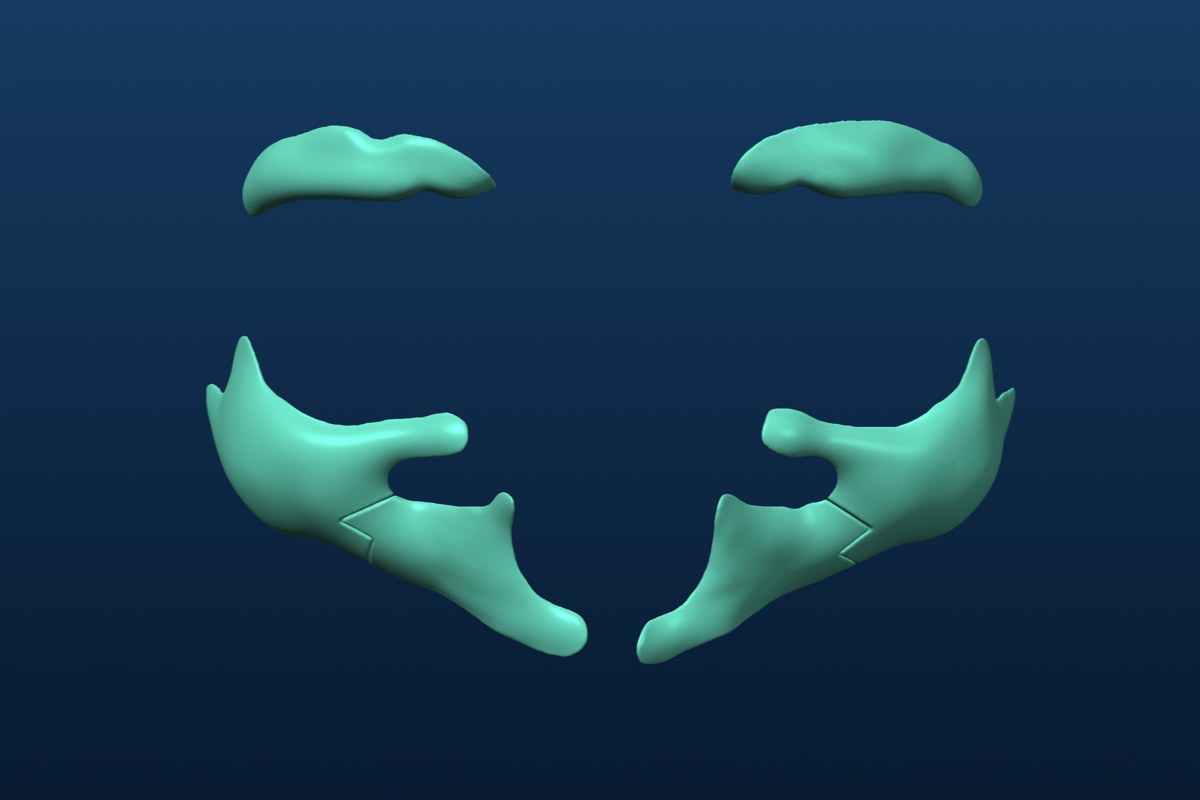
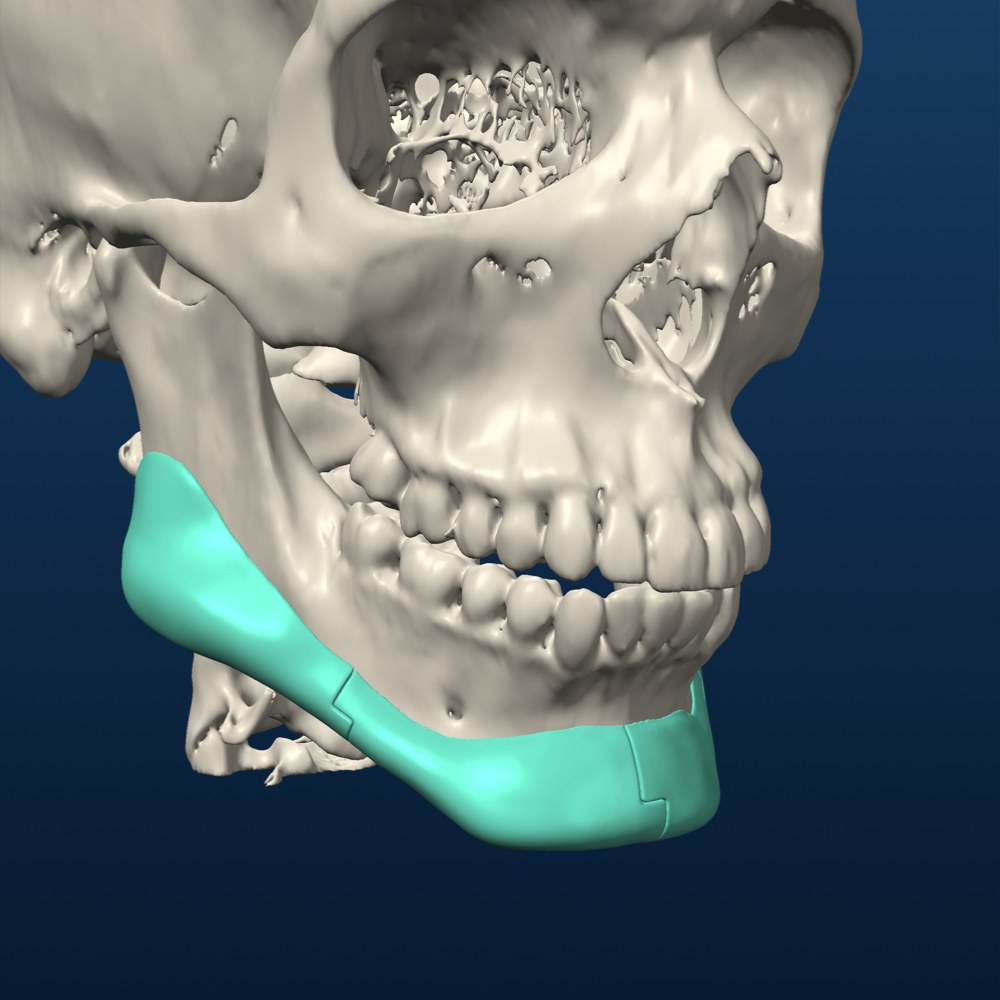
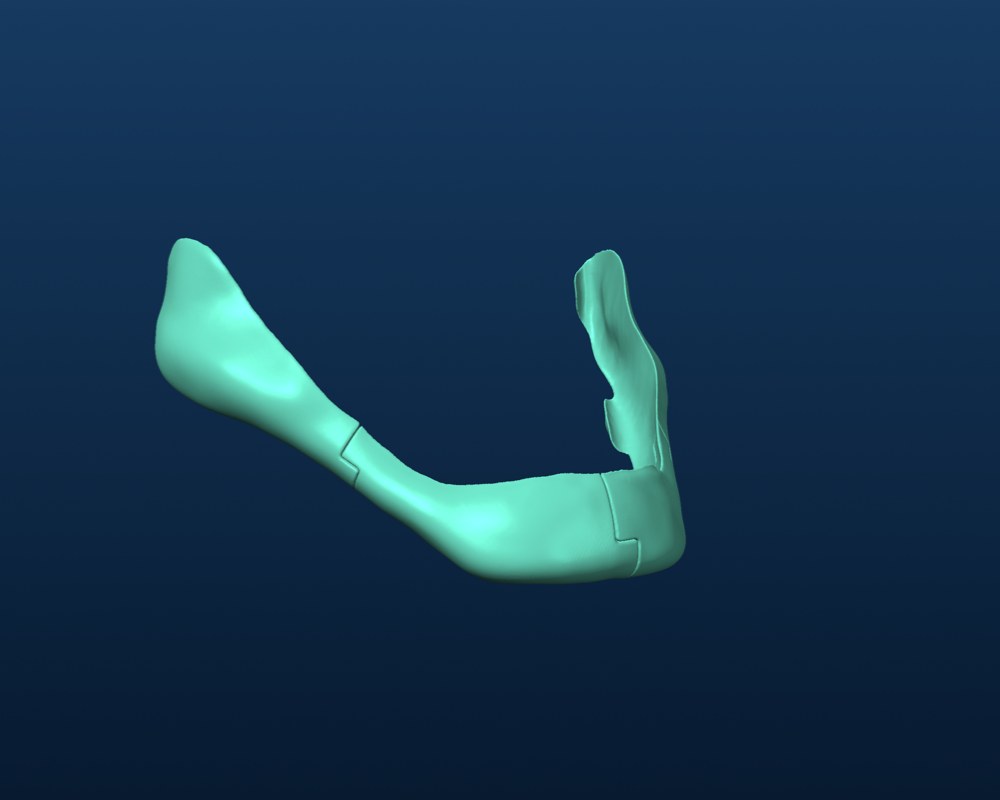
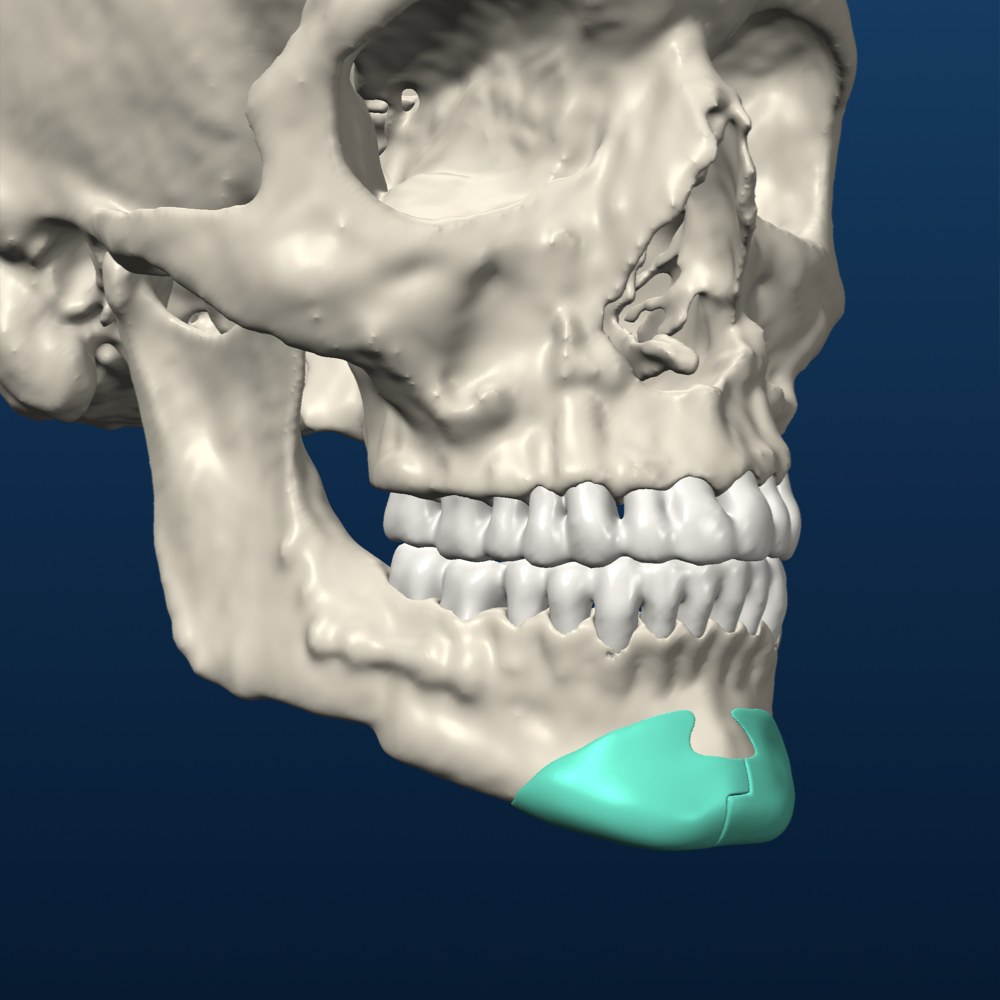
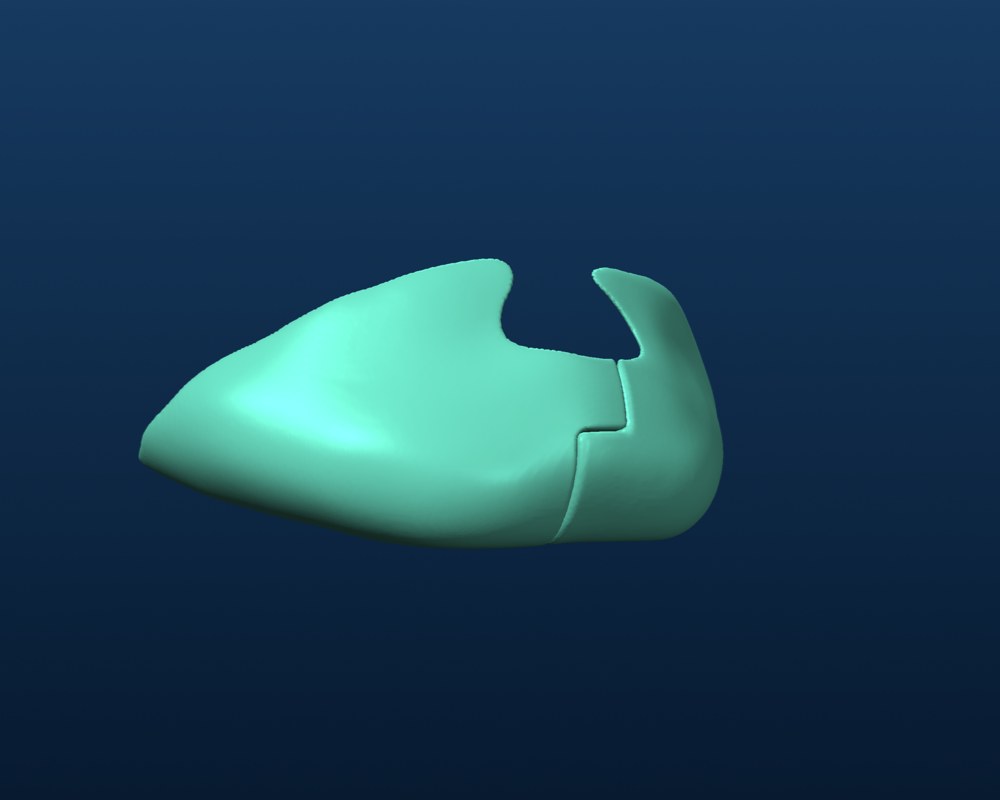
Wraparound mandibular onlay

A wraparound mandibular onlay extends along the mandibular body, angle region, and chin border as one continuous contour. It is used when the lower facial frame requires broader definition rather than a single point augmentation.

The design must balance jawline width, gonial definition, chin transition, and soft edge blending along the inferior border.
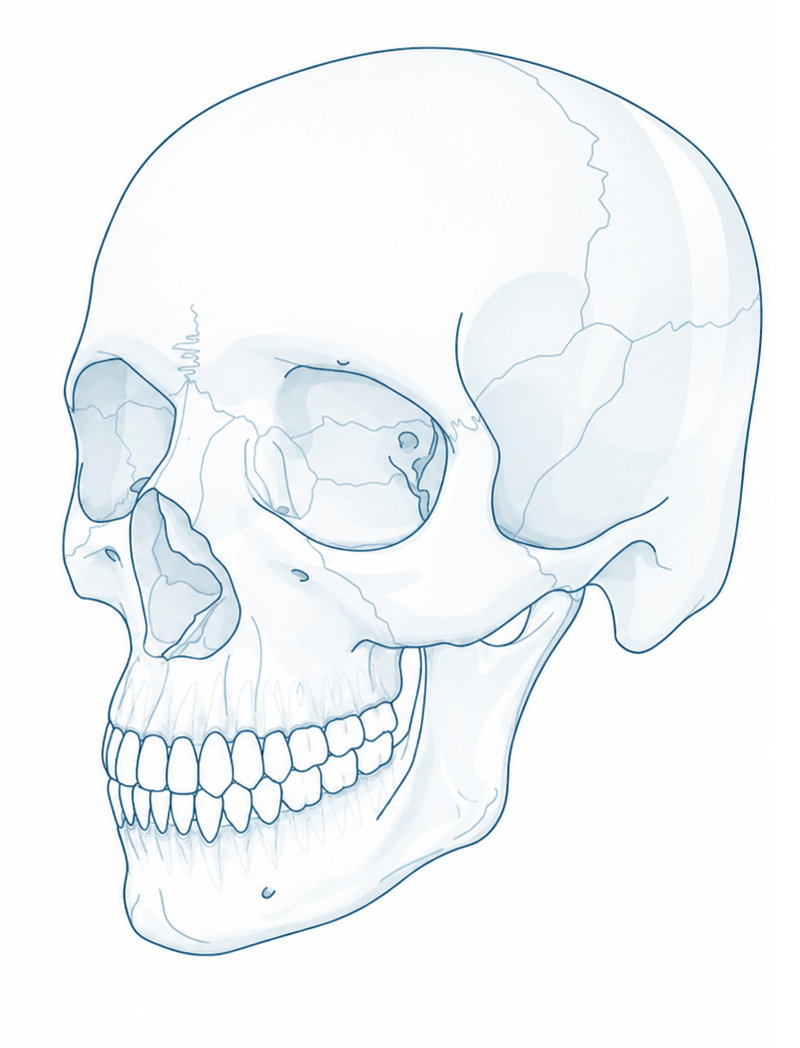
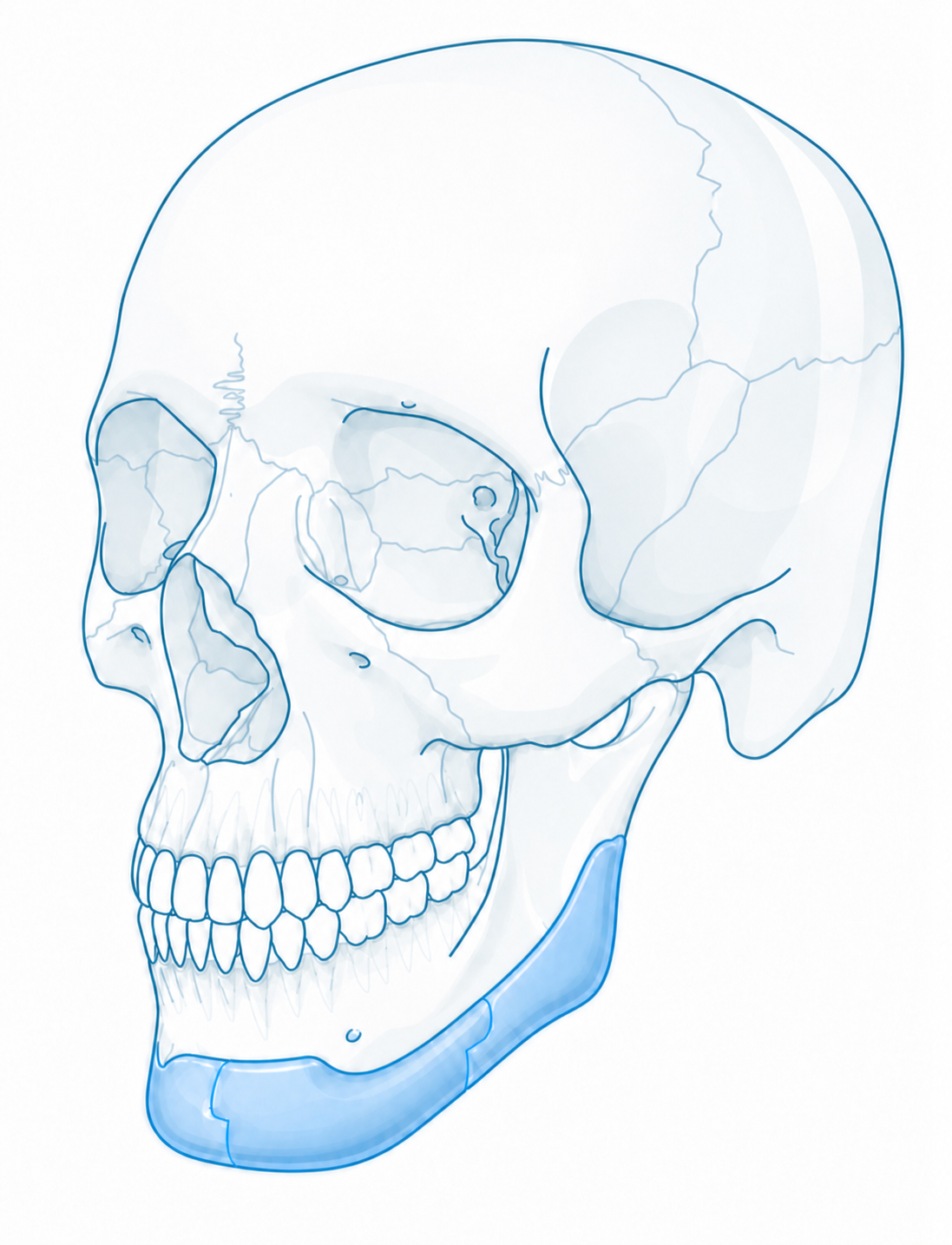
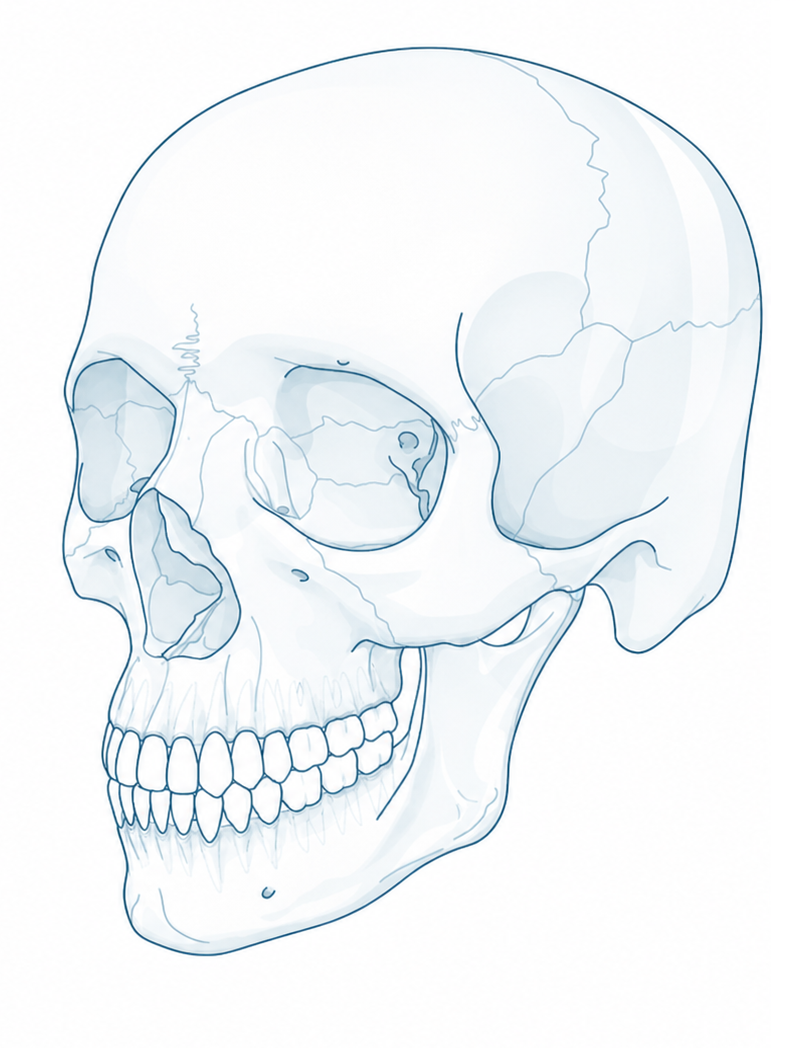
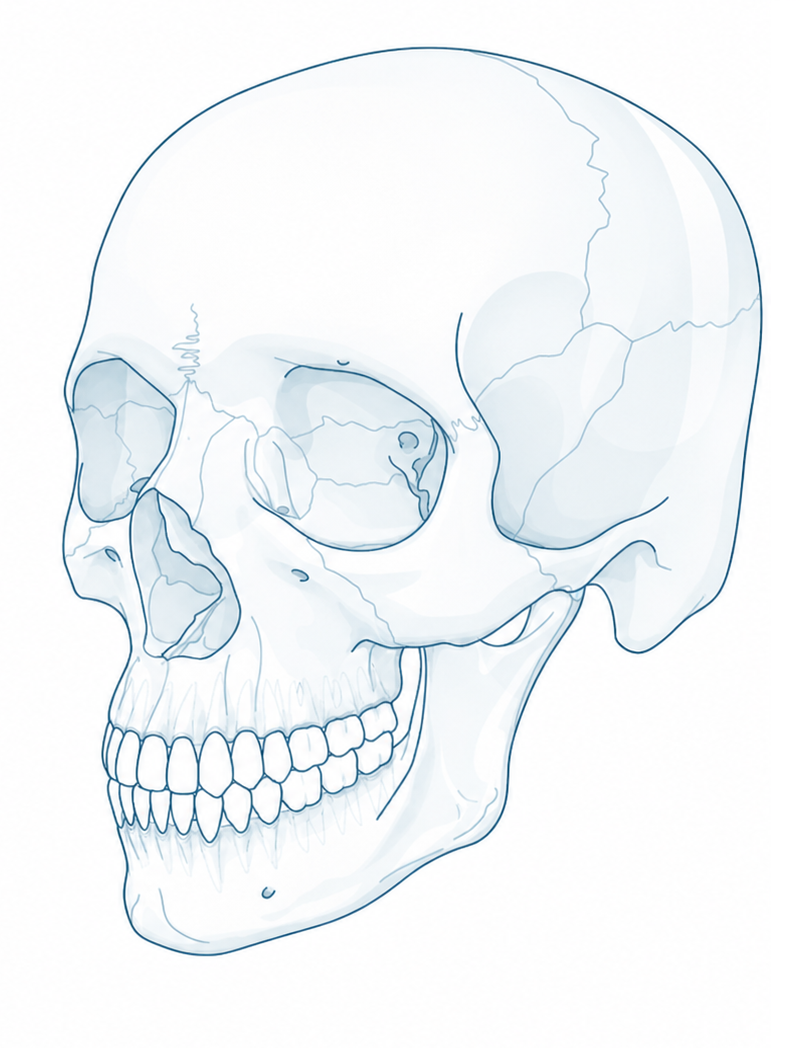
Lateral skull without wraparound mandibular onlay
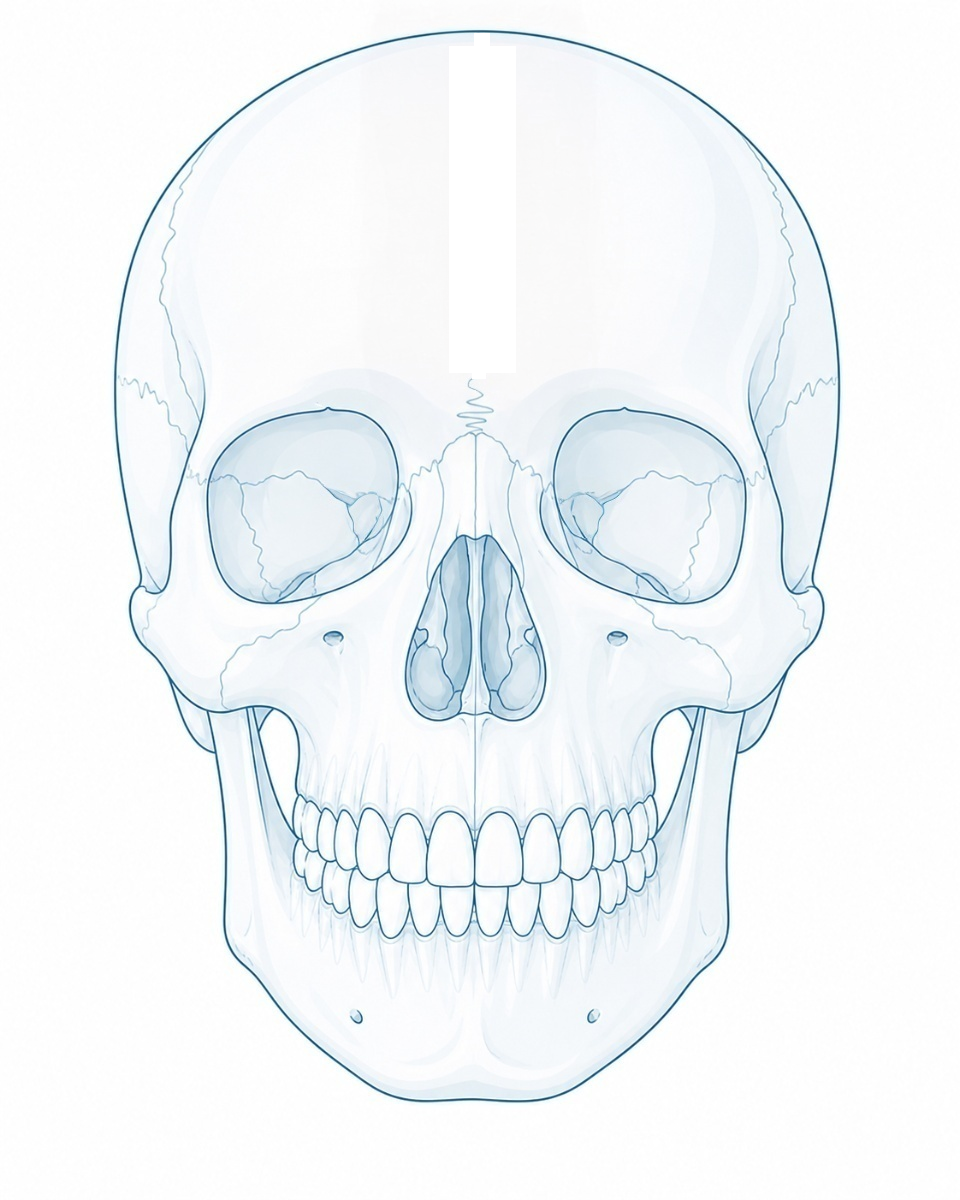
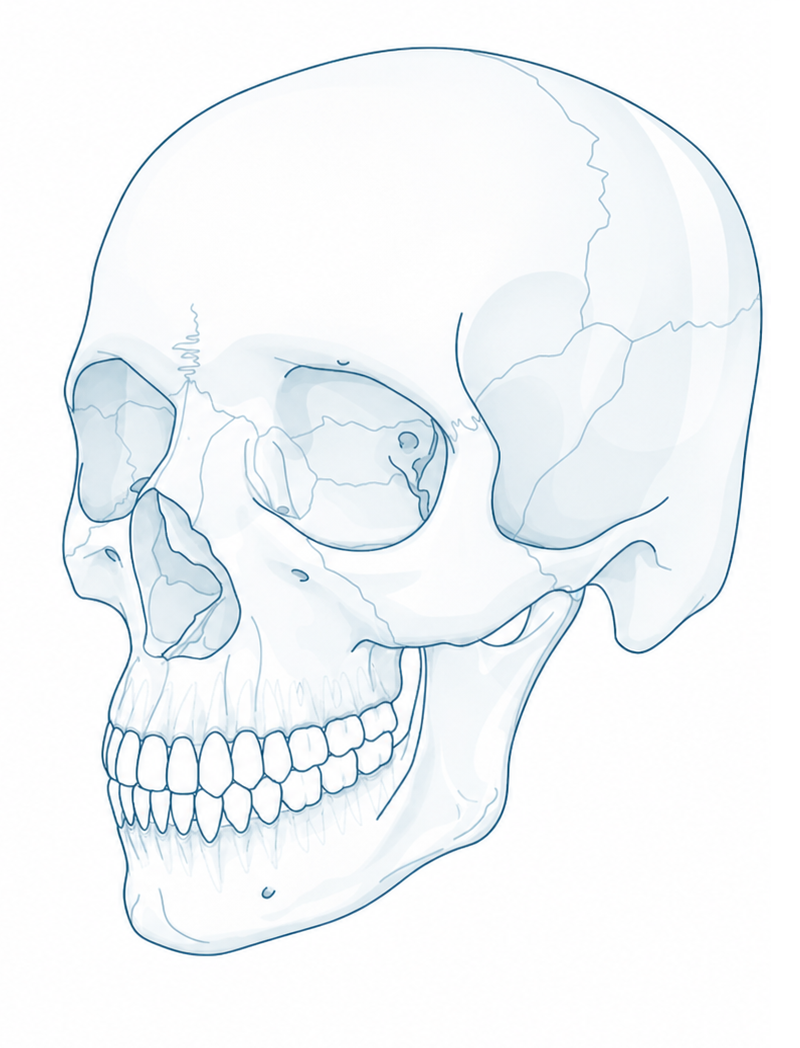
Preoperative situation (lateral view)
Lateral skull with wraparound mandibular onlay
Postoperative situation (lateral view)
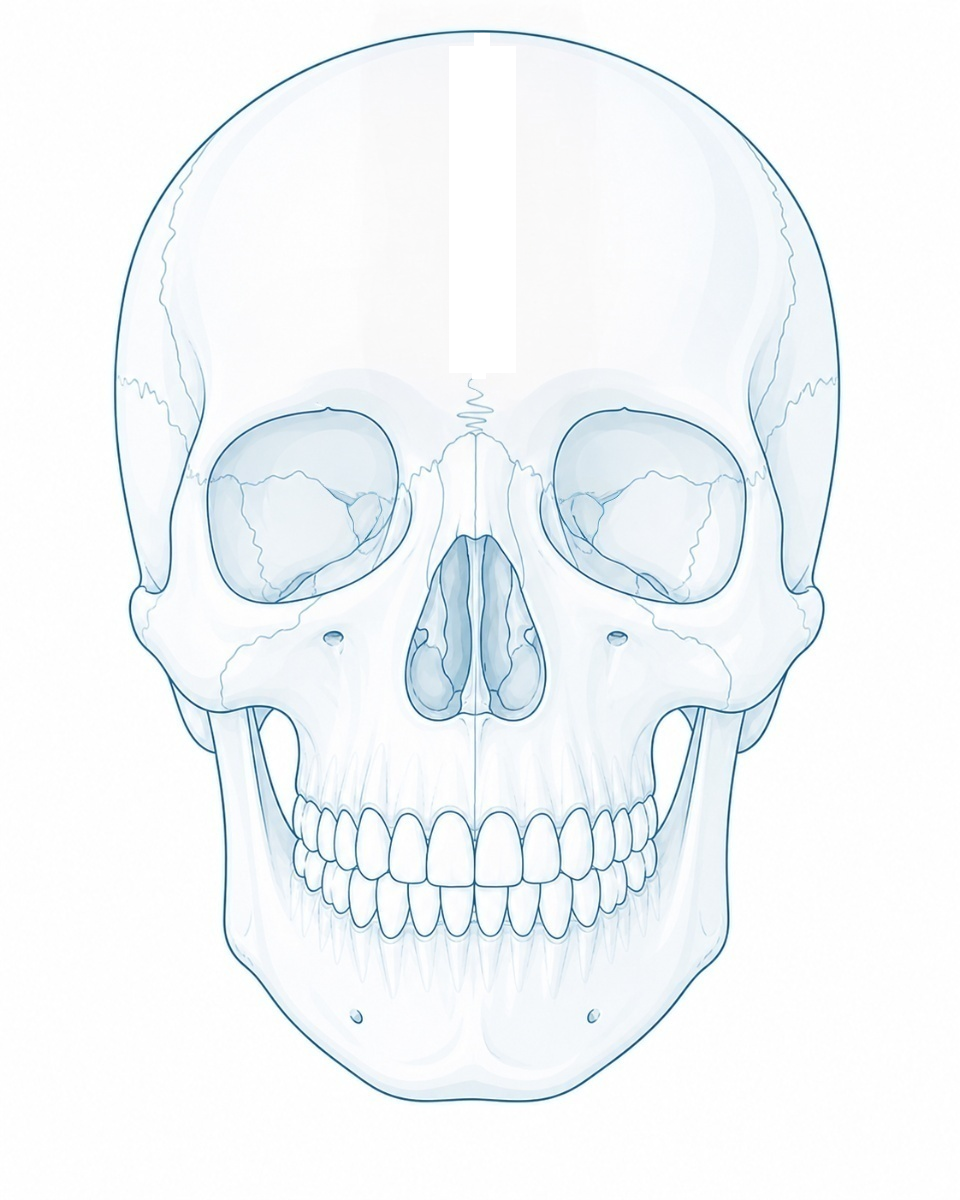
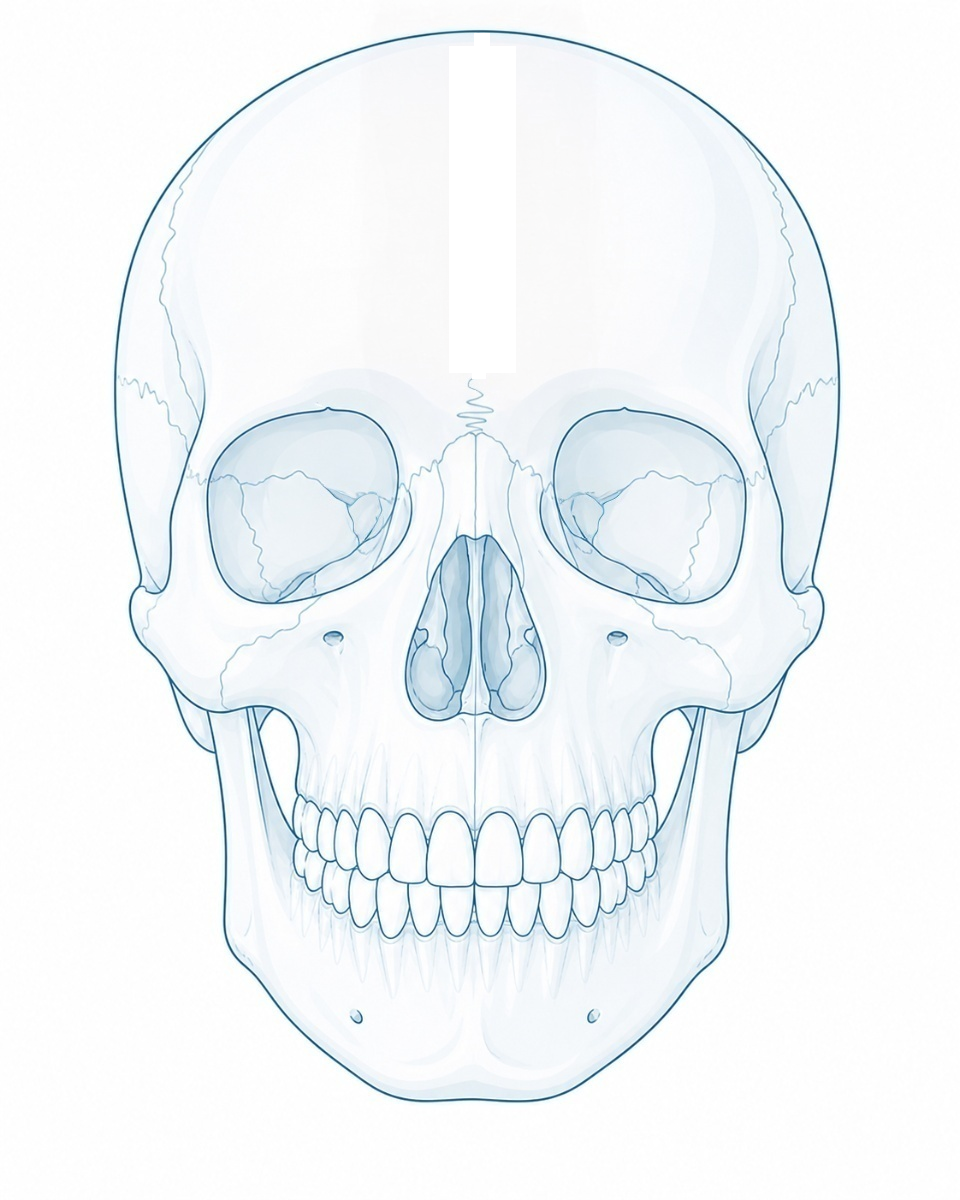
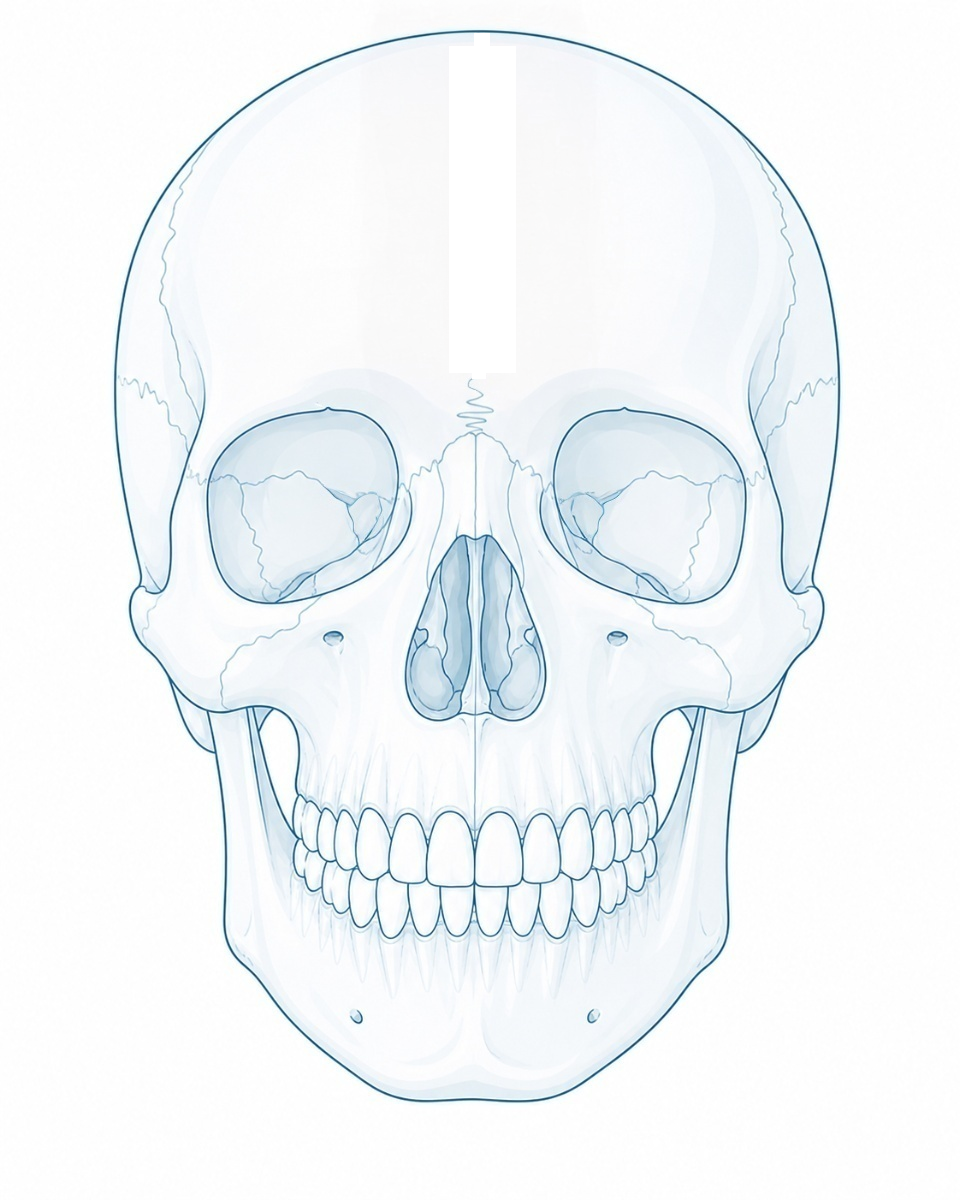
Frontal skull without wraparound mandibular onlay
Preoperative situation (frontal view)
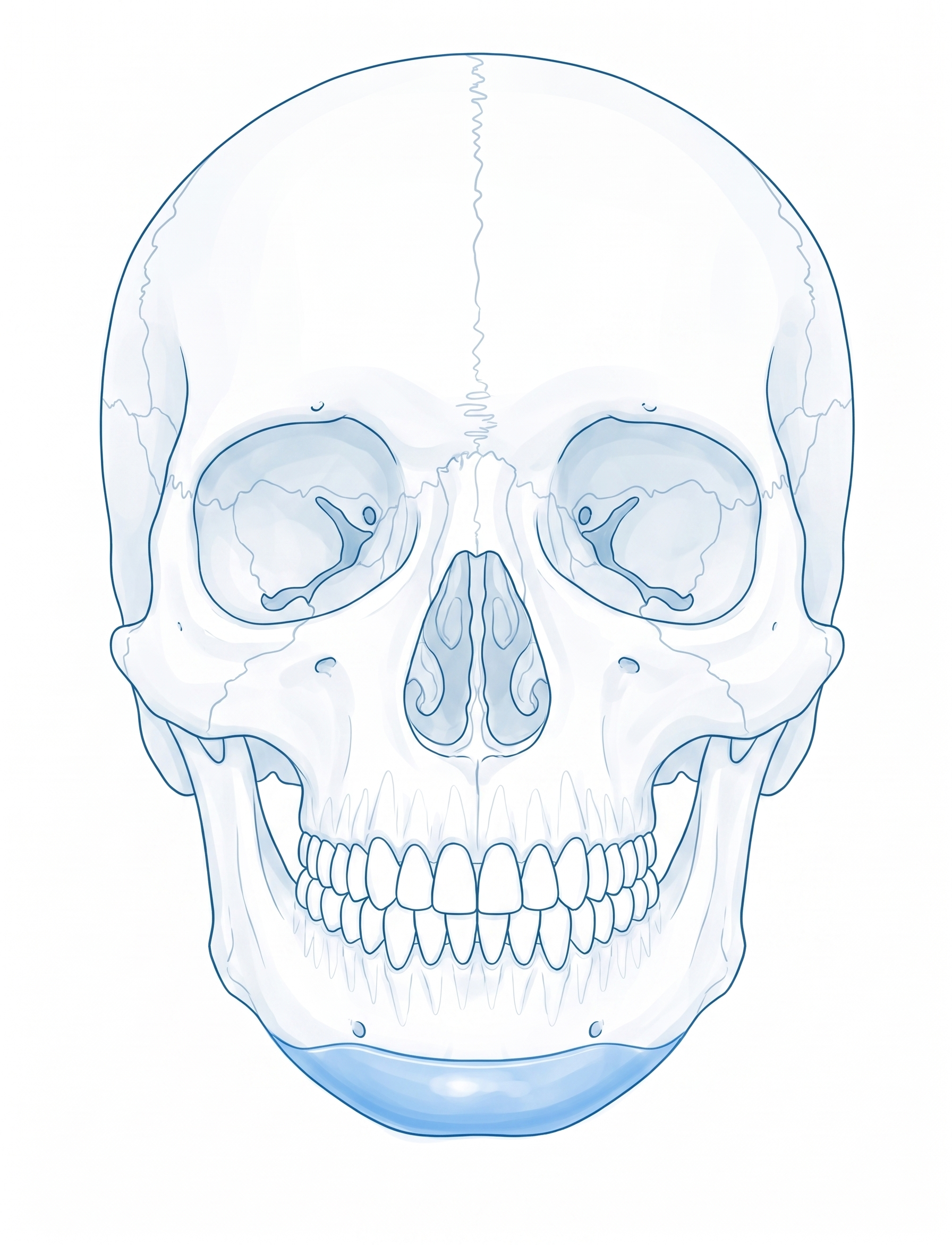
Frontal skull with wraparound mandibular onlay
Postoperative situation (frontal view)
Mandibular angle

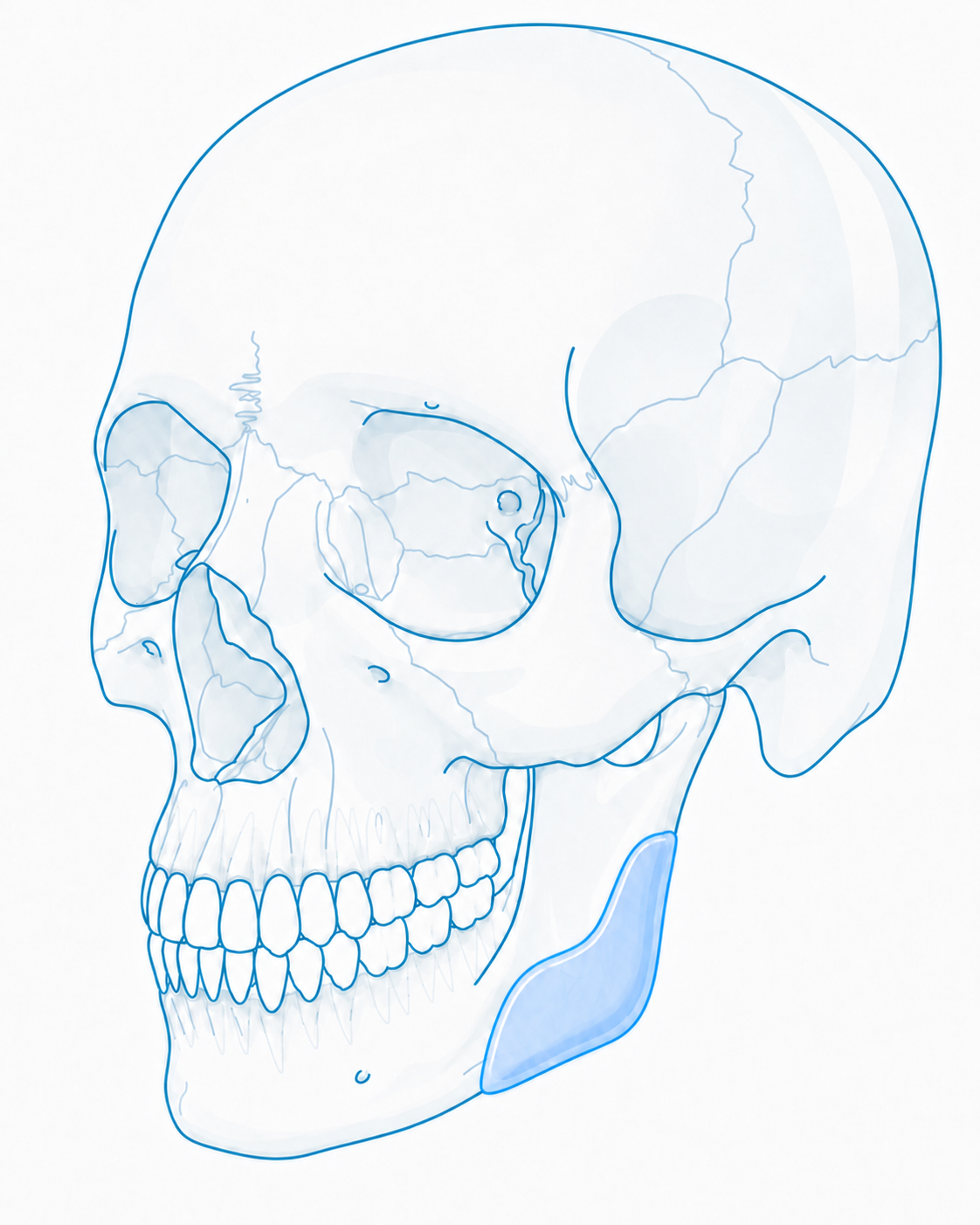
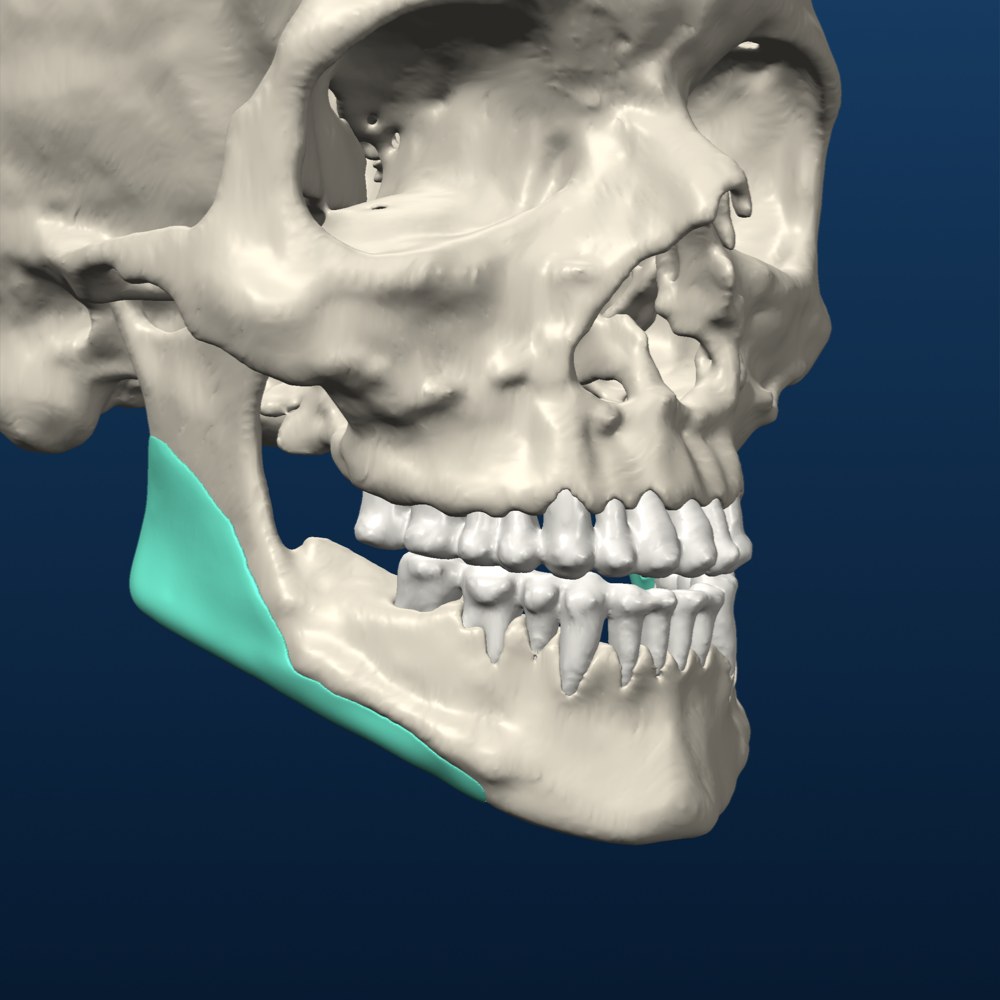
Gonial angle onlay

Angle onlays augment the posterior mandibular border and gonial region. They are used to sharpen the mandibular angle, increase transverse width, or restore contour asymmetry after trauma, congenital deficiency, or prior surgery.

The posterior and inferior margins are tapered so that the implant transitions into the native mandibular ramus and body without a visible step.

Lateral skull without gonial angle onlay
Preoperative situation (lateral view)
Lateral skull with gonial angle onlay
Postoperative situation (lateral view)
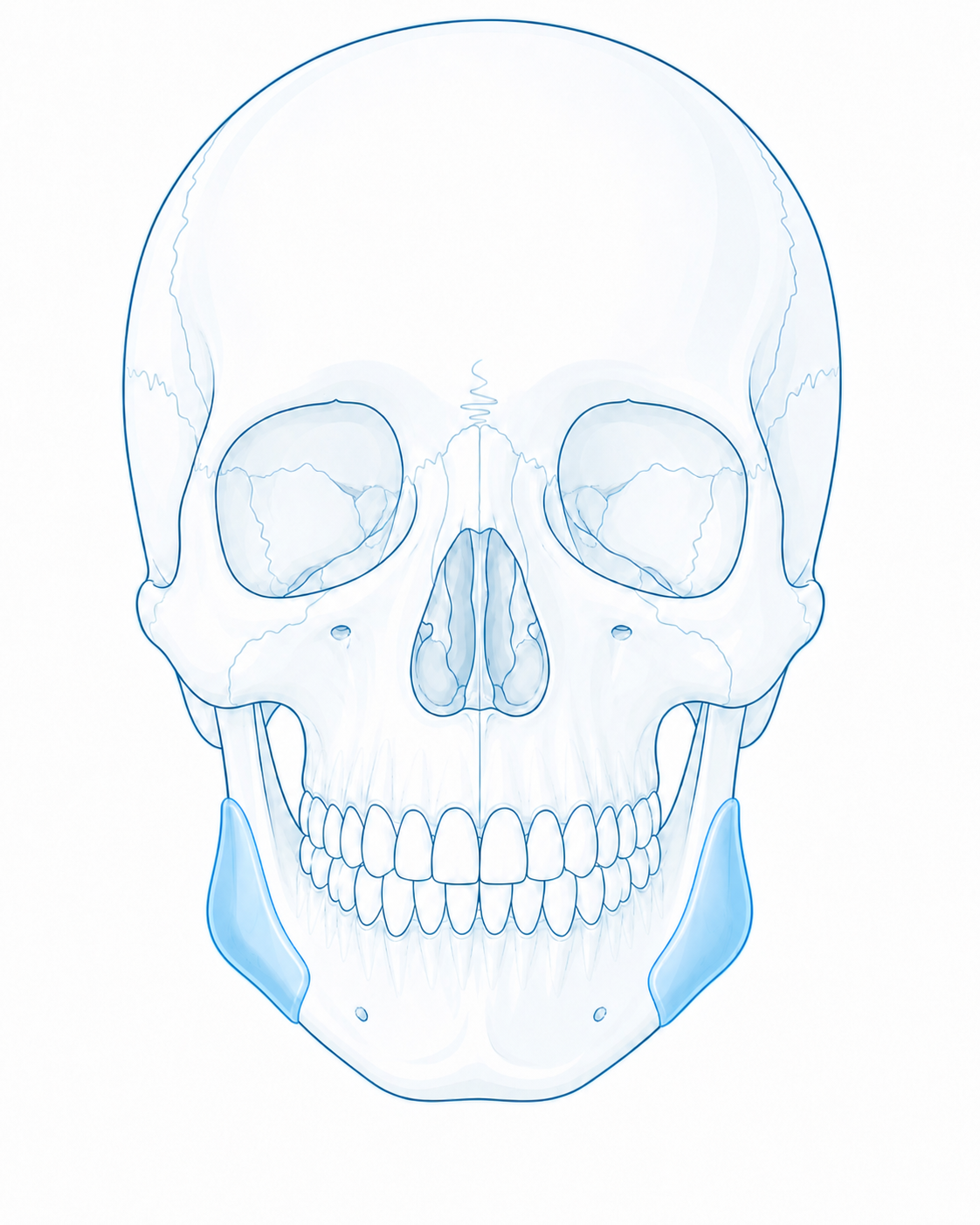
Frontal skull without gonial angle onlay
Preoperative situation (frontal view)
Frontal skull with gonial angle onlay
Postoperative situation (frontal view)
Chin

Chin onlay

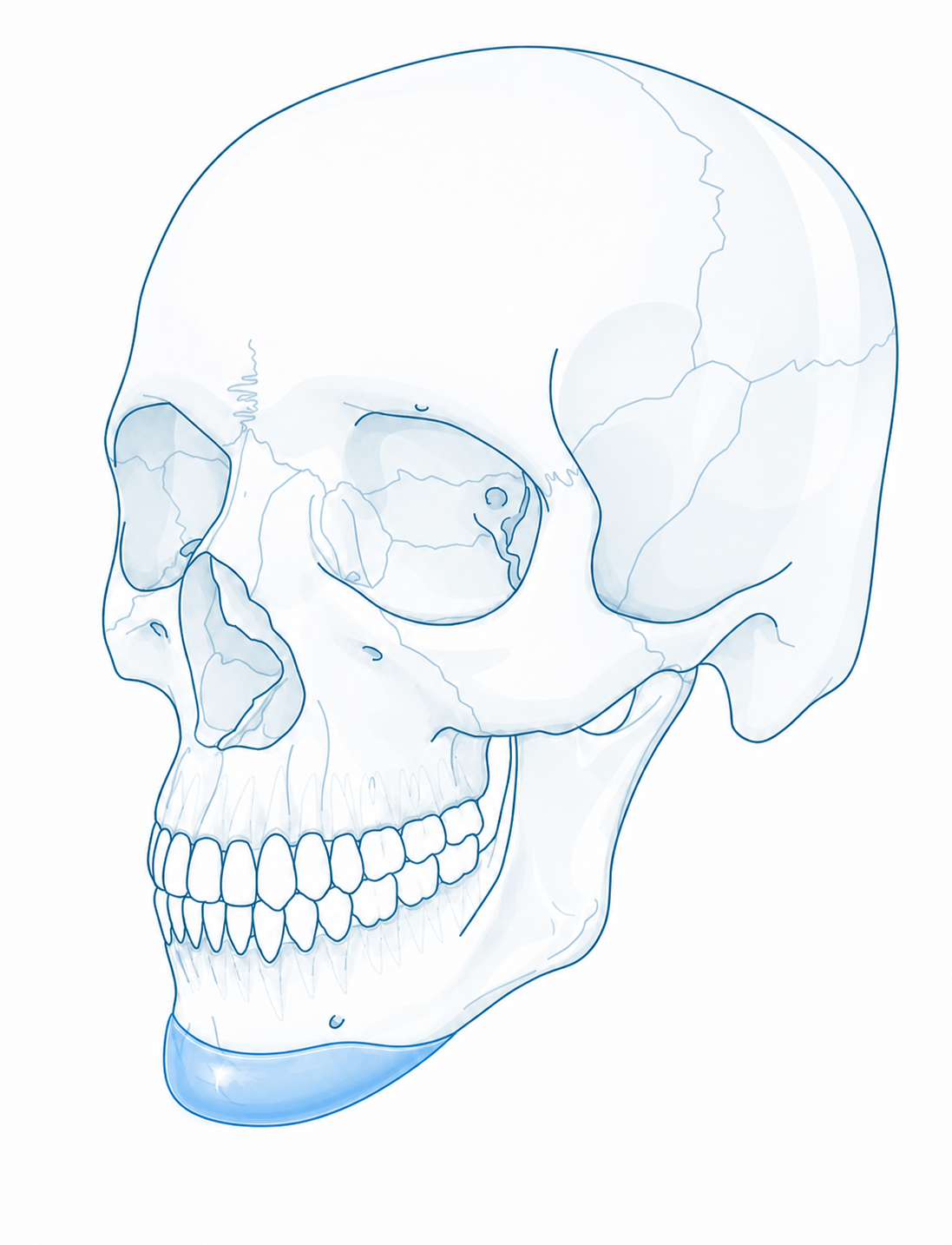
Chin onlays increase anterior or inferior projection without a sliding genioplasty. They can refine the lower facial third, correct contour deficiency, and connect the central chin shape to the mandibular border.

The implant outline is planned around the mental nerve region and tapered laterally to avoid an abrupt transition into the mandibular body.

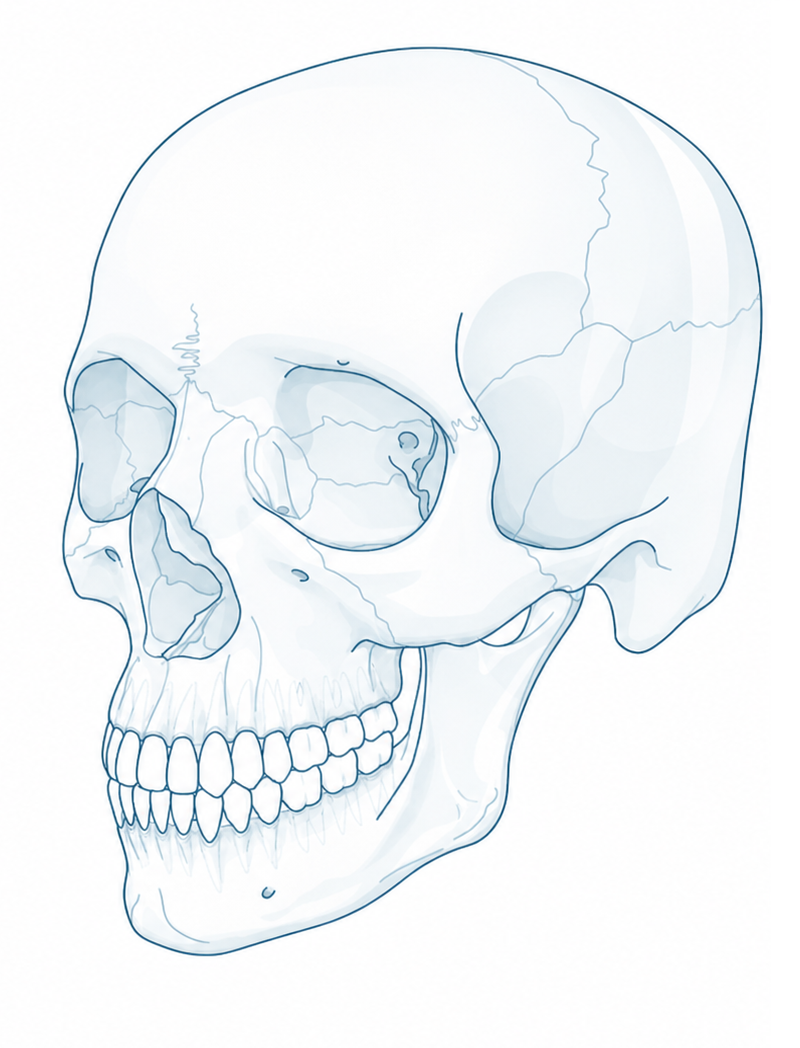
Lateral skull without chin onlay
Preoperative situation (lateral view)
Lateral skull with chin onlay
Postoperative situation (lateral view)
Frontal skull without chin onlay
Preoperative situation (frontal view)
Frontal skull with chin onlay
Postoperative situation (frontal view)
Malar region

Malar onlay

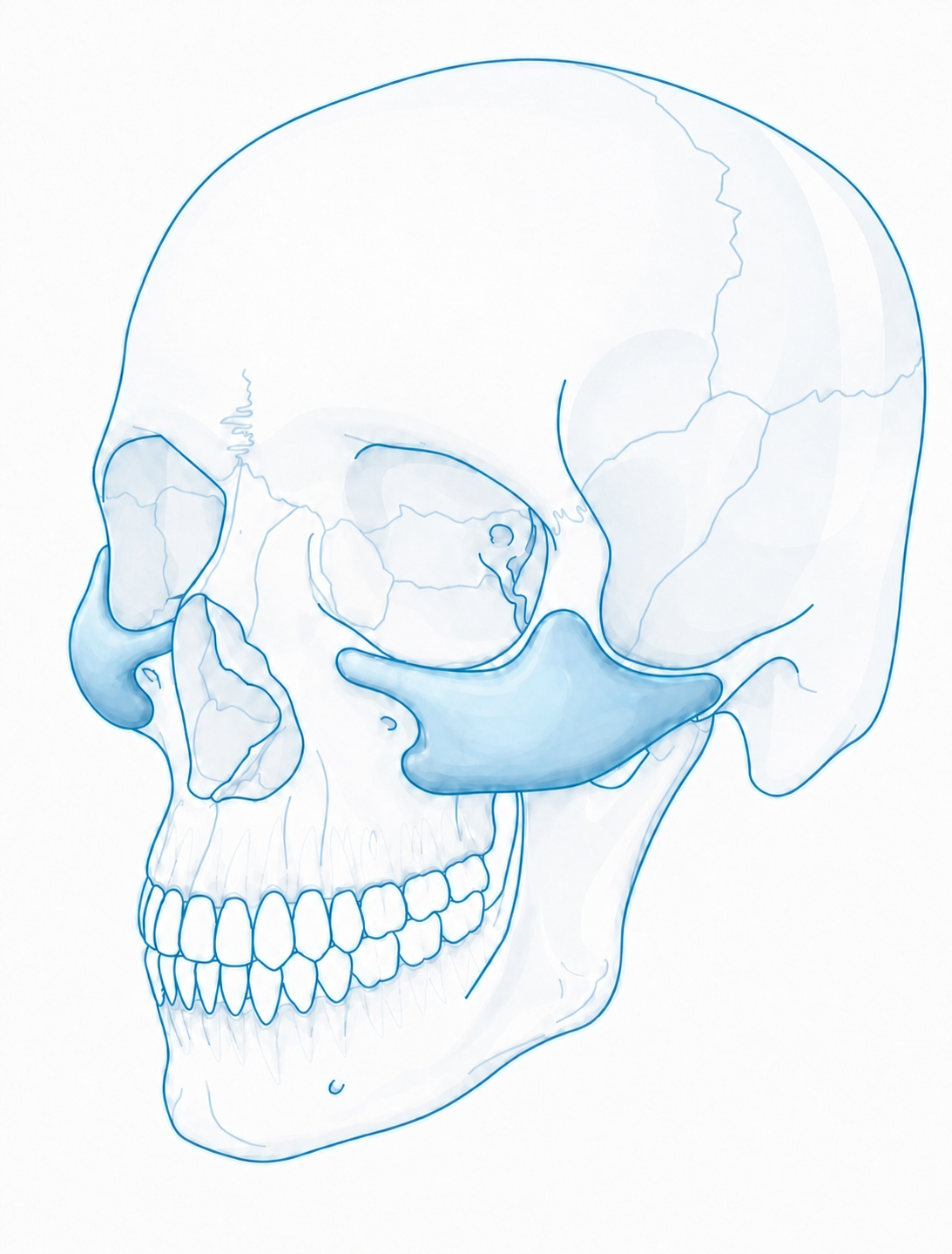
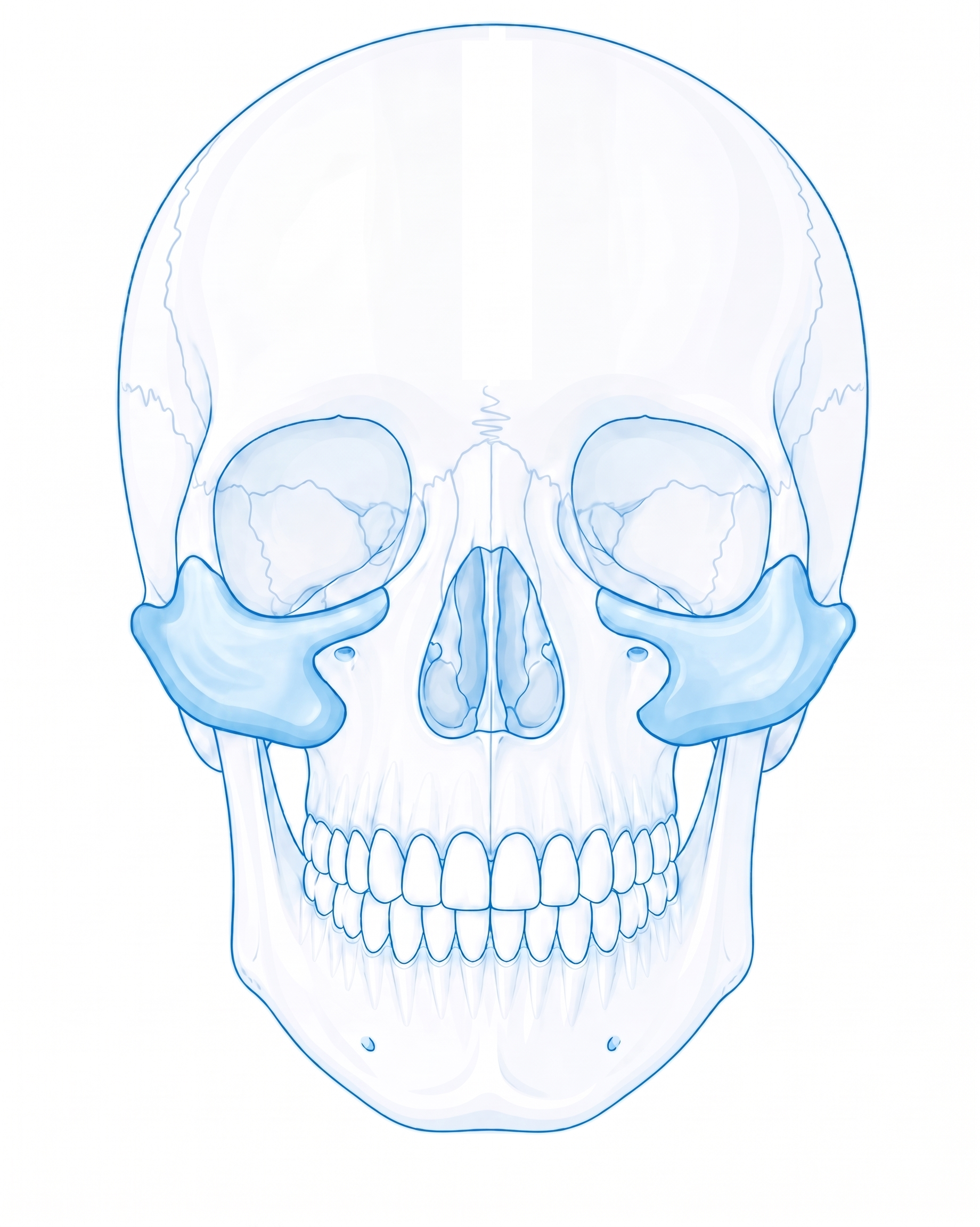
Malar onlays augment the zygomatic body and adjacent midface contour. They can increase cheek projection, improve malar symmetry, and restore deficient skeletal support in the lateral midface.

The visible contour is planned in both lateral and frontal views so that projection, upper cheek width, and infraorbital transition remain balanced.

Lateral skull without malar onlay
Preoperative situation (lateral view)
Lateral skull with malar onlay
Postoperative situation (lateral view)
Frontal skull without malar onlay
Preoperative situation (frontal view)
Frontal skull with malar onlay
Postoperative situation (frontal view)
Supraorbital rim

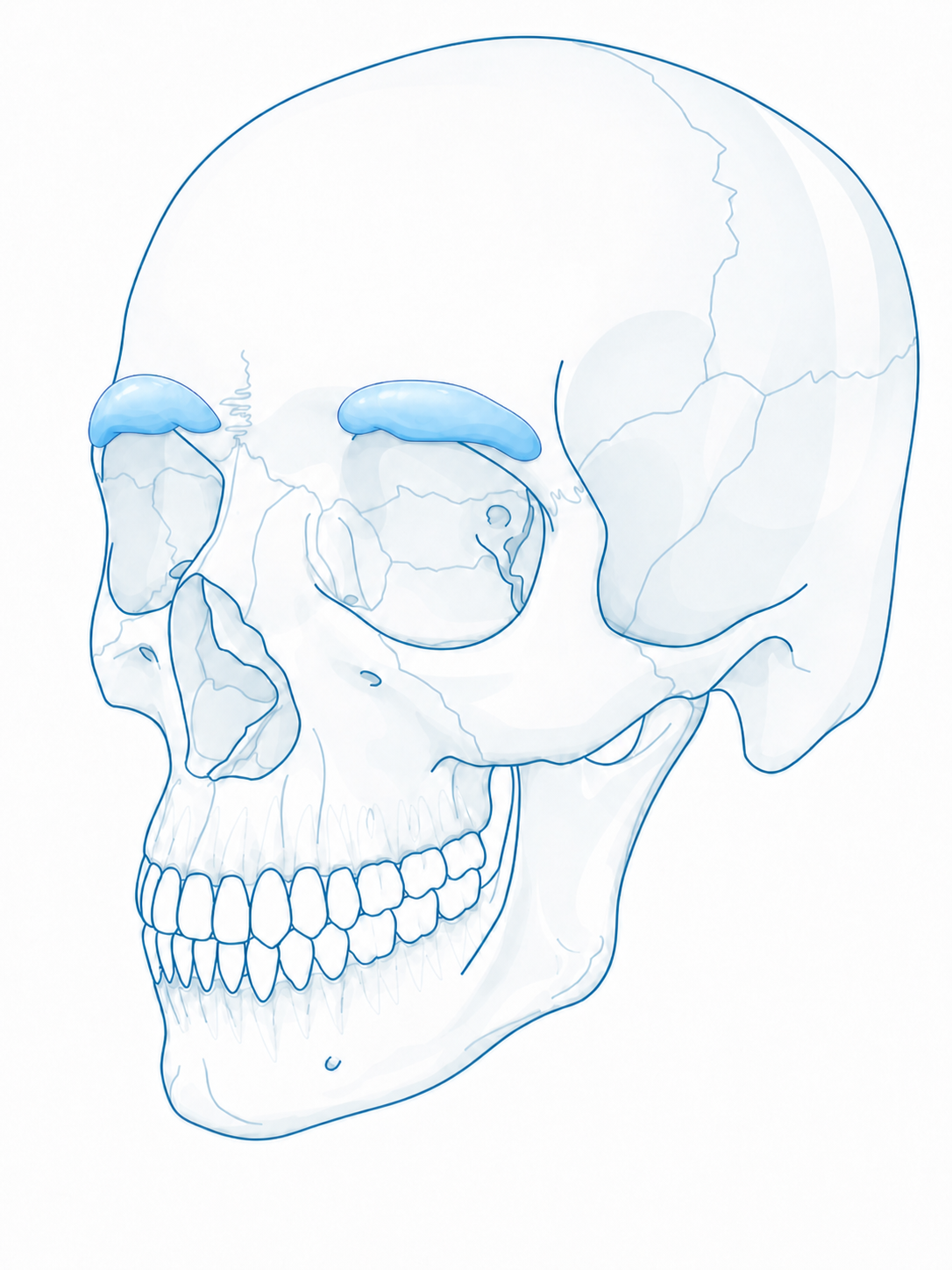
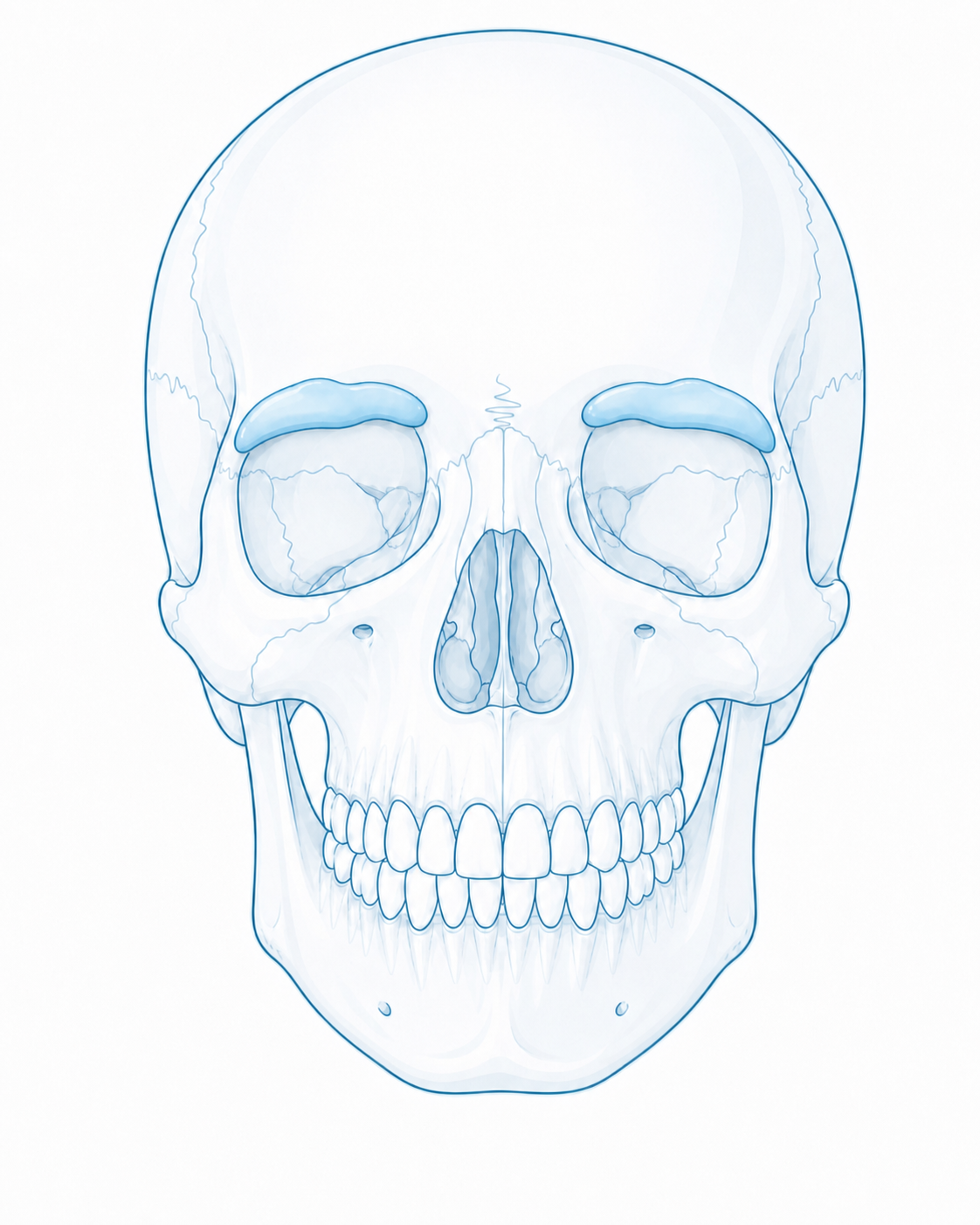
Supraorbital rim onlay

Supraorbital rim onlays augment the upper orbital frame and brow skeleton. They are used for rim definition, contour restoration, and controlled skeletal projection in the periorbital region. By increasing brow-bone projection, they can also deepen and frame the eyes, creating the more hooded, masculine appearance often referred to as "hunter eyes".

The implant is shaped with attention to orbital contour, brow transition, and fixation corridors outside sensitive anatomy.

Lateral skull without supraorbital rim onlay
Preoperative situation (lateral view)
Lateral skull with supraorbital rim onlay
Postoperative situation (lateral view)
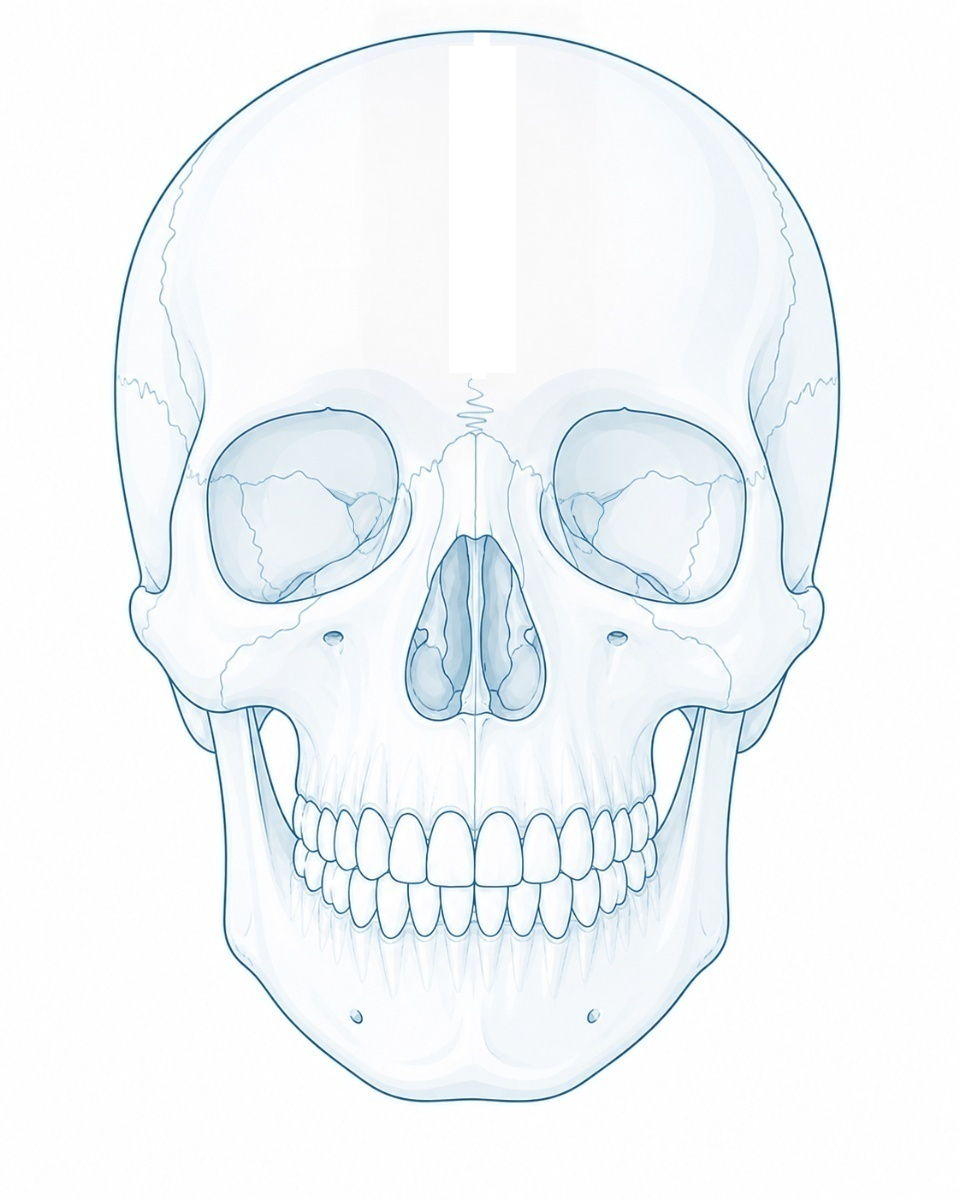
Frontal skull without supraorbital rim onlay
Preoperative situation (frontal view)
Frontal skull with supraorbital rim onlay
Postoperative situation (frontal view)
03 · Design logic

From Skeletal Surface to Final Contour

The digital design is checked from the surgical access, the planned fixation points, and the external contour that will be visible after soft tissue coverage.

Patient matched fit

The inner surface follows the individual bone so that the implant seats in one defined position during surgery.

Tapered transition

The outer contour and border thickness are reduced near the margins to avoid a palpable or visible edge.

Fixation planning

Screw positions are selected together with the implant shape and the intended surgical approach.

READY WHEN YOU ARE

Submit a case, receive a plan.

Send the patient's CT and dental scan through our secure channel. A planning proposal is typically returned within 2–5 working days, case-dependent.