Custom implant reconstruction

Patient Specific
Implants

Individual implants for complex skeletal defects, load bearing reconstruction, anatomical restoration, and prosthetic support.

Before you submit a case

Imaging & data requirements

How to acquire the CT/CBCT we need to design a patient-specific implant — our requirements from your side, on one printable sheet.

Download PDF
01 · The procedure

What Patient Specific Implants Do

A patient-specific implant rebuilds missing or damaged bone when a standard implant cannot match the needed shape or fit. It is designed directly on the patient's anatomy, often by mirroring the healthy side, and made in titanium or PEEK for one defined position.

The design weighs the defect shape, the mirrored reference, the load the implant must carry, screw access, and soft-tissue cover, so the finished component is made to seat in its planned place rather than adjusted during surgery.

Planning variables
Fit
inner surface matched to the target bone
Contour
outer surface designed from anatomical references
Fixation
screw corridors planned outside critical structures
Function
implant geometry adapted to load and movement
Access
implant shape reviewed for the surgical route
02 · Implant applications

TMJ, Orbital, and Subperiosteal Reconstruction

Patient specific implants can be used across different anatomical regions. The common principle is a controlled transfer from the digital reconstruction target to a manufactured implant with a defined seating position.

TMJ reconstruction

Joint replacing implant

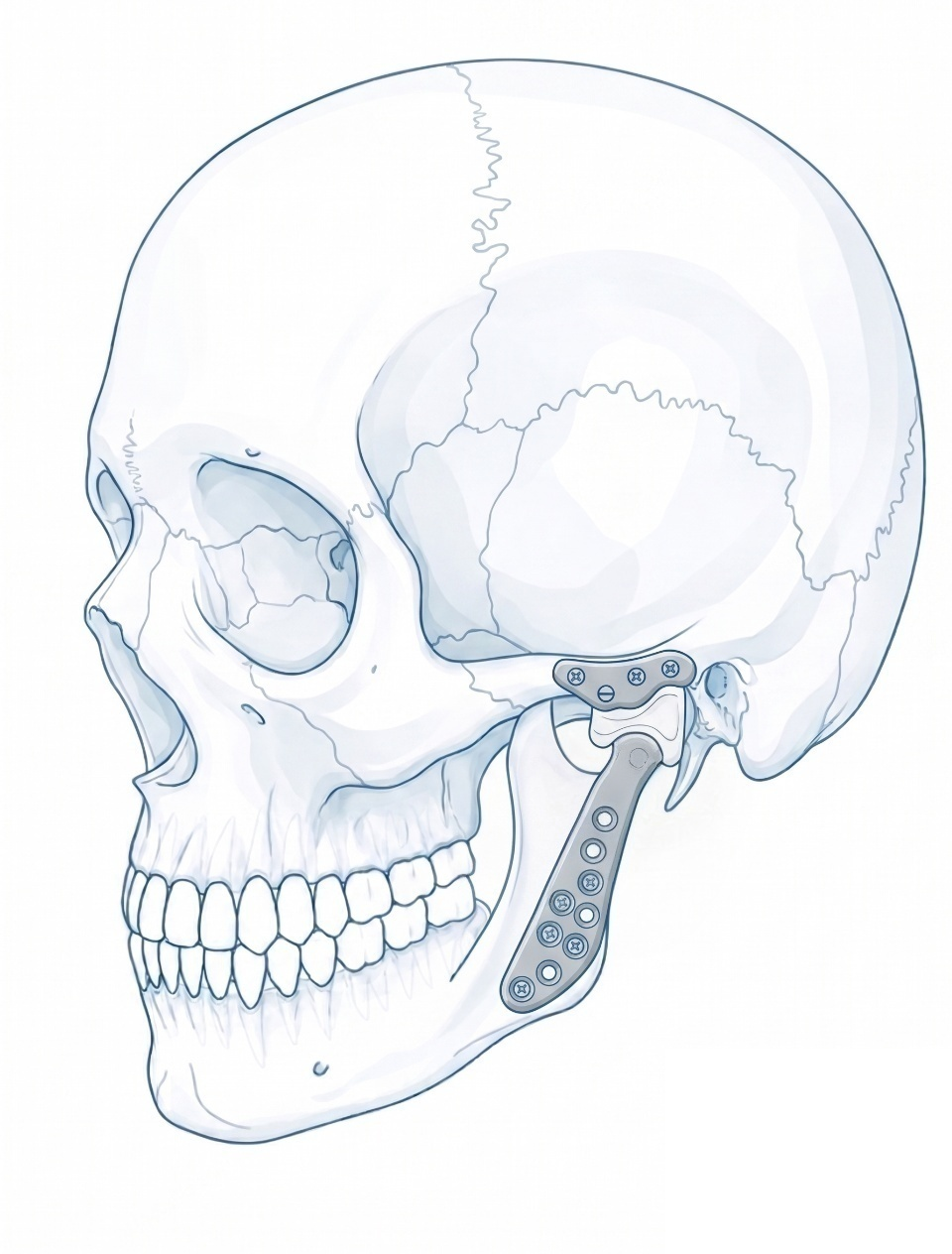
A patient specific TMJ implant can restore mandibular ramus height, condylar function, and joint position when the native joint cannot be preserved. The reconstruction is matched to the temporal bone and mandibular anatomy.

The baseline skull and the final implant position are checked in the same lateral view so that the change in skeletal support, screw access, and prosthetic articulation can be assessed.
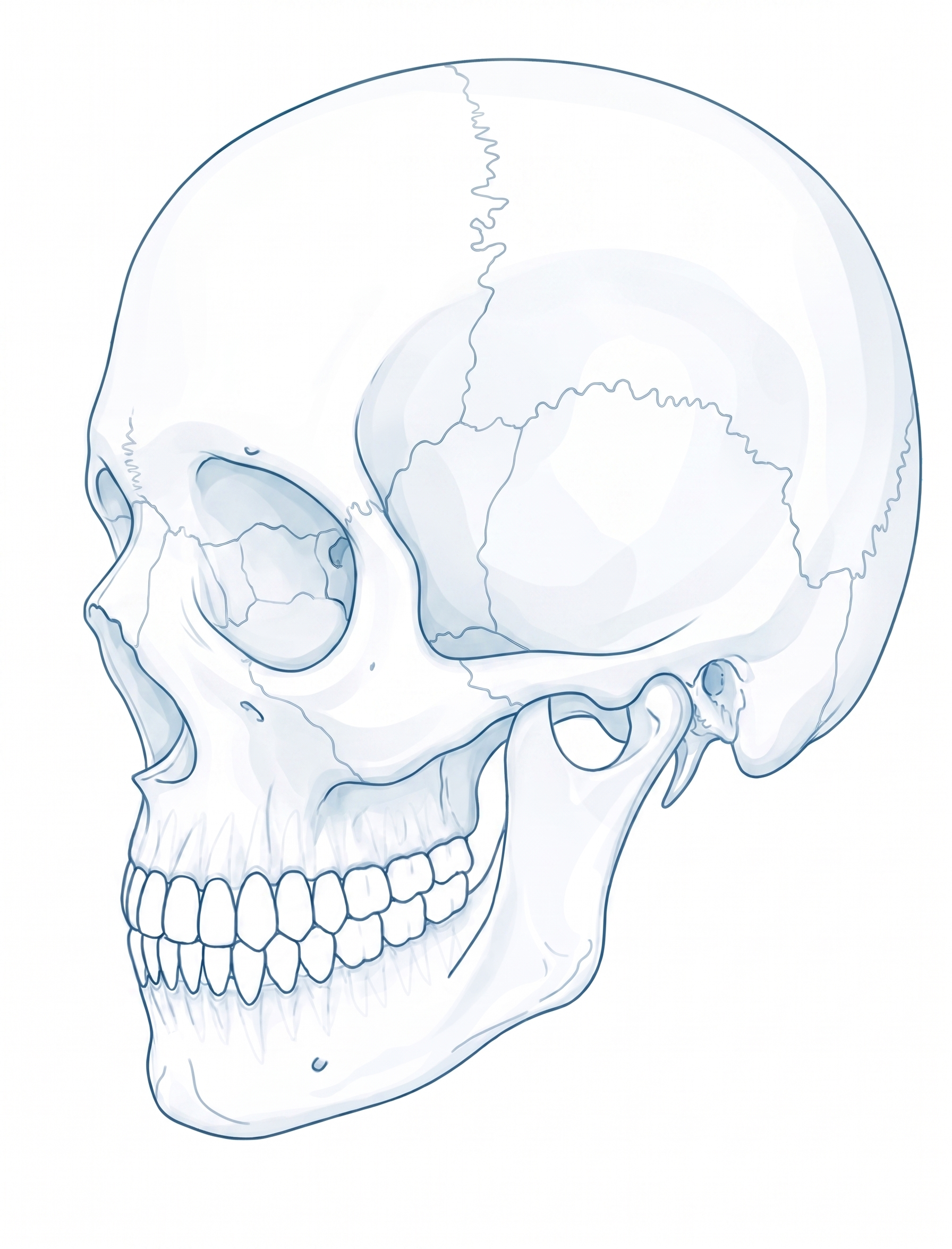
Lateral skull baseline before patient specific TMJ reconstruction
Lateral baseline
Lateral skull with patient specific TMJ reconstruction implant
Patient specific TMJ implant
Orbit

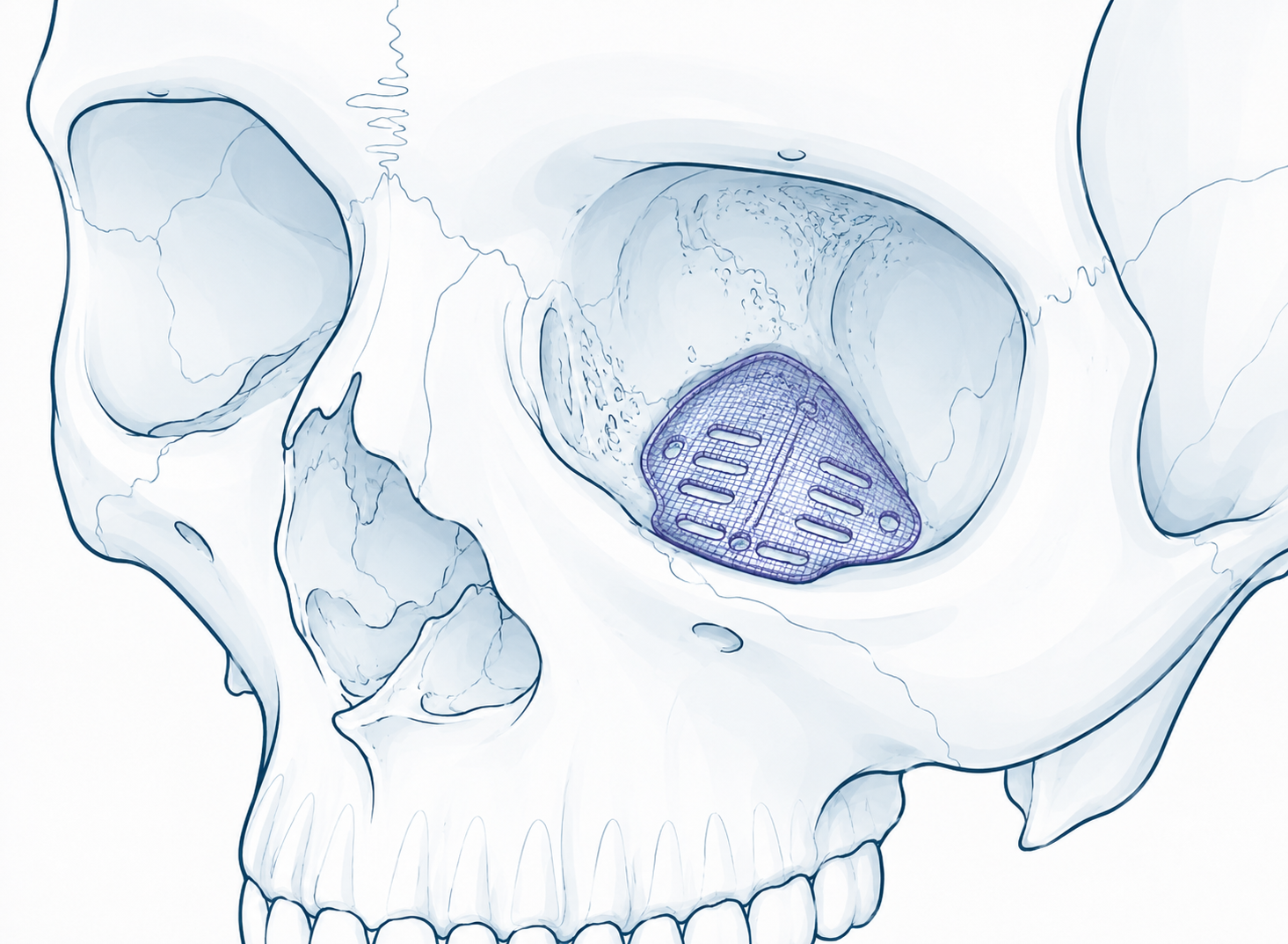
Orbital floor implant

Orbital implants reconstruct the internal orbital contour and support the orbital contents in a planned position. The design is based on defect margins, native orbital shape, and the desired globe support.

Porosity, fixation options, and border transition are reviewed so that the implant can seat securely without interfering with adjacent orbital anatomy.

Patient specific orbital floor implant in the orbit
Orbital PSI design
Maxilla

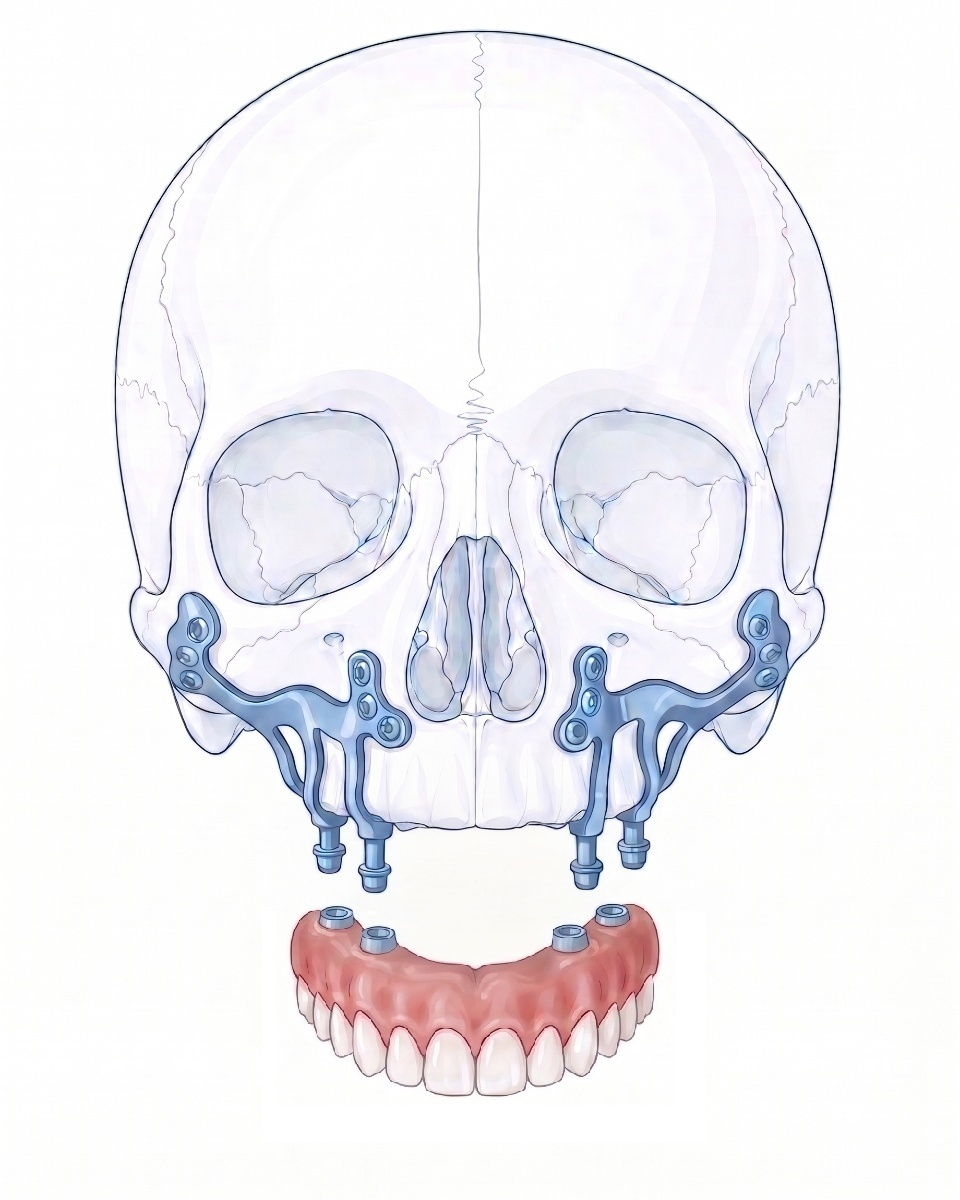
Subperiosteal implant

Subperiosteal implants can provide patient matched support for fixed dental rehabilitation when conventional endosseous implants are not feasible. The framework follows the maxillary surface and connects planned fixation points to prosthetic emergence positions.

The implant is evaluated from the facial view to check symmetry, screw access, and the relationship between the skeletal support and the planned dental restoration.

Patient specific subperiosteal maxillary implant with dental prosthetic component
Subperiosteal maxillary PSI
03 · Design logic

From Defect Analysis to Manufactured Implant

Each implant is reviewed as a surgical object, not only as a digital reconstruction. Seating behavior, fixation, access, material thickness, and border transitions are checked before manufacturing.

Anatomical restoration

The missing contour is reconstructed from mirrored anatomy, preserved landmarks, or a defined functional target.

Controlled fixation

Screw positions are planned together with the implant body so that the implant can be stabilized in the intended position.

Surgical transfer

The design is checked for access, seating, insertion path, and intraoperative handling before production.

READY WHEN YOU ARE

Submit a case, receive a plan.

Send the patient's CT and dental scan through our secure channel. A planning proposal is typically returned within 2–5 working days, case-dependent.