Precise intraoperative transfer

Surgical
Guides

Patient specific cutting, drilling, and positioning guides that translate the virtual surgical plan into controlled intraoperative execution.

Before you submit a case

Imaging & data requirements

How to acquire the imaging we need to design accurate surgical guides — our requirements from your side, on one printable sheet.

Download PDF
01 · The procedure

What Surgical Guides Do

A surgical guide is a custom template that seats onto the patient's bone and brings the digital plan directly into the surgical site. Designed from the CT scan, it lets the planned osteotomies, drill positions, and screw points be reproduced exactly on the patient, so each cut, drill, or repositioning happens precisely where it was planned.

It is more than a printed shape. The seating surface, visibility, access, thickness, sleeve direction, and fixation points are planned together so the guide fits one way and sits the same every time.

Planning variables
Fit
stable seating on a unique bony surface
Transfer
cutting slots, drill sleeves, or positioning stops
Access
guide geometry adapted to the surgical approach
Fixation
temporary screw fixation where movement must be avoided
Verification
visible landmarks and planned contact zones
02 · Guide families

Orthognathic and Mandibular Transfer Guides

Different guide types follow the same planning logic. The device must seat on patient anatomy, remain stable during the surgical step, and transfer the relevant element of the virtual plan without adding unnecessary bulk.

Orthognathic surgery

Cutting and positioning guides

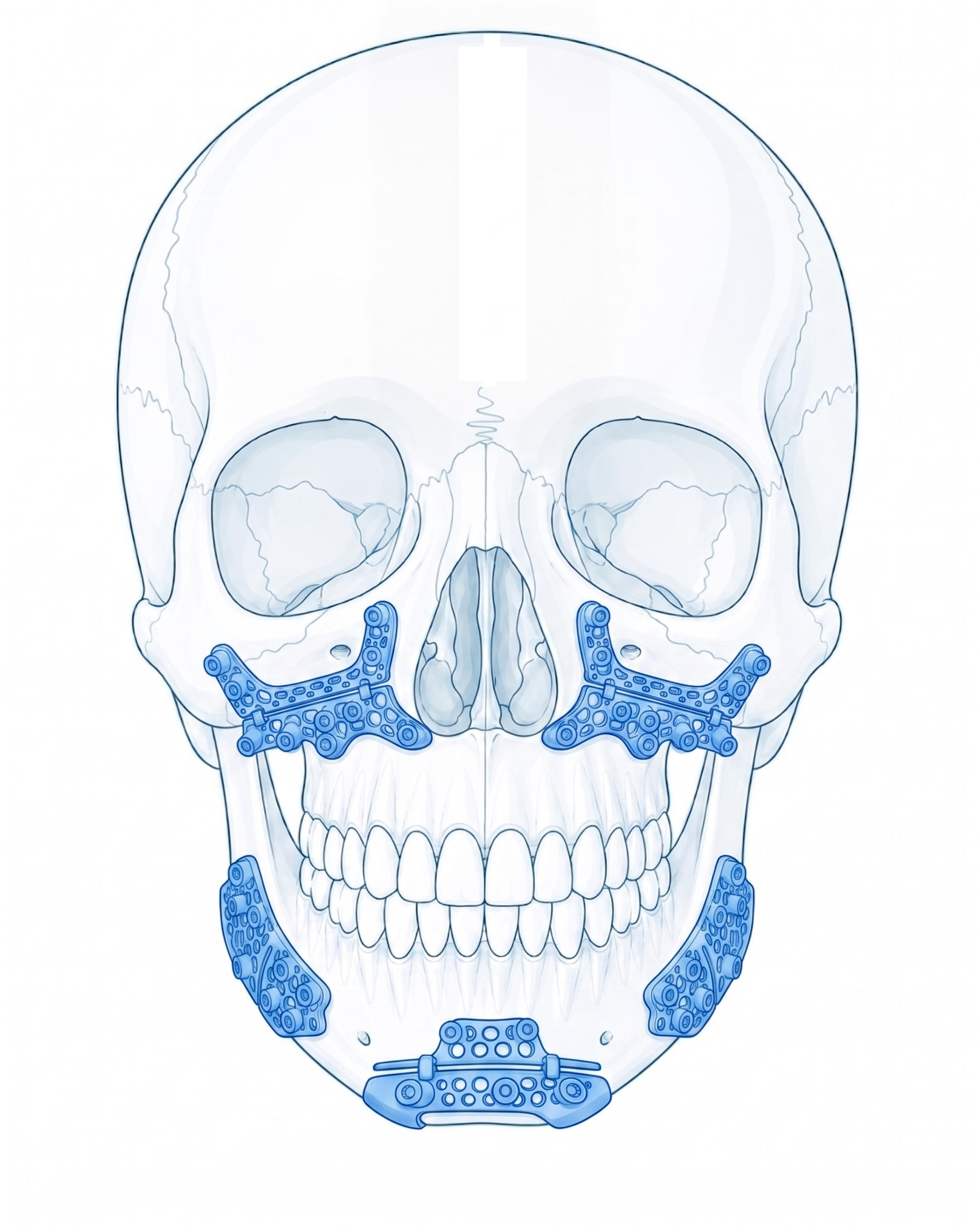
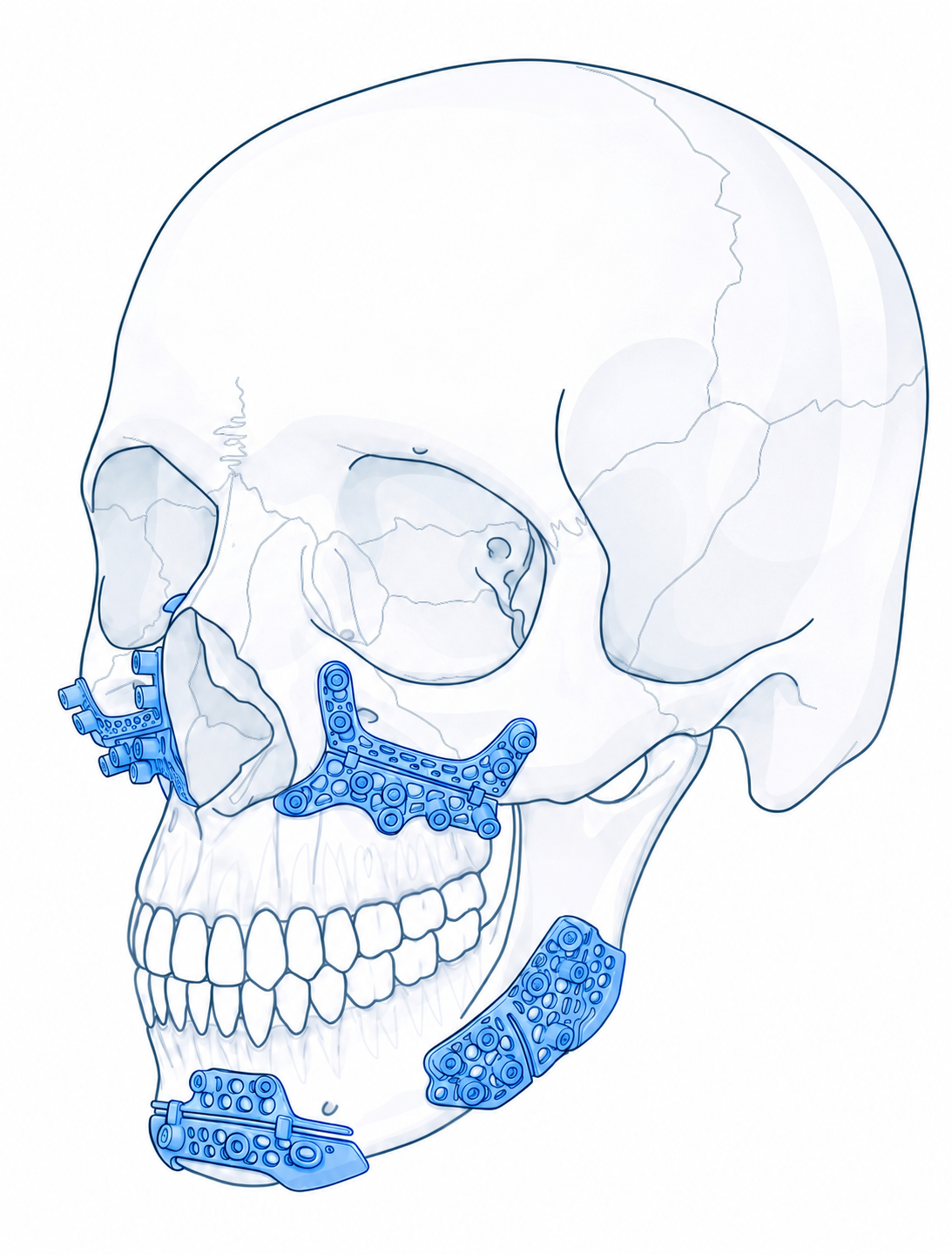
In orthognathic surgery, guides can define osteotomy lines, planned drill positions, and segment repositioning. They support transfer of the virtual plan when customized fixation or patient specific positioning is used.

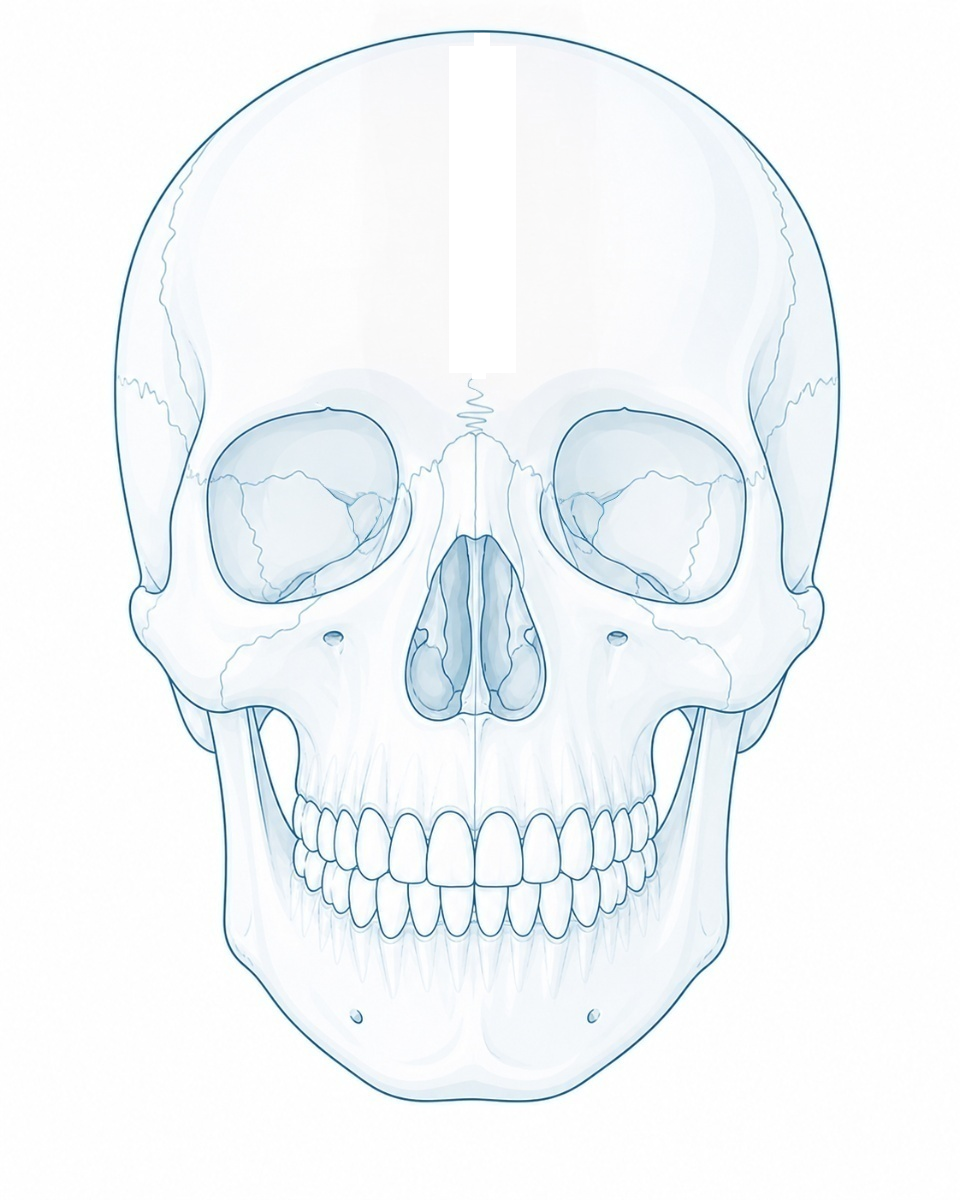
Frontal and lateral checks are used to evaluate visibility, access, fixation corridors, and the relationship between the guide, the bony surface, and the planned titanium plates.
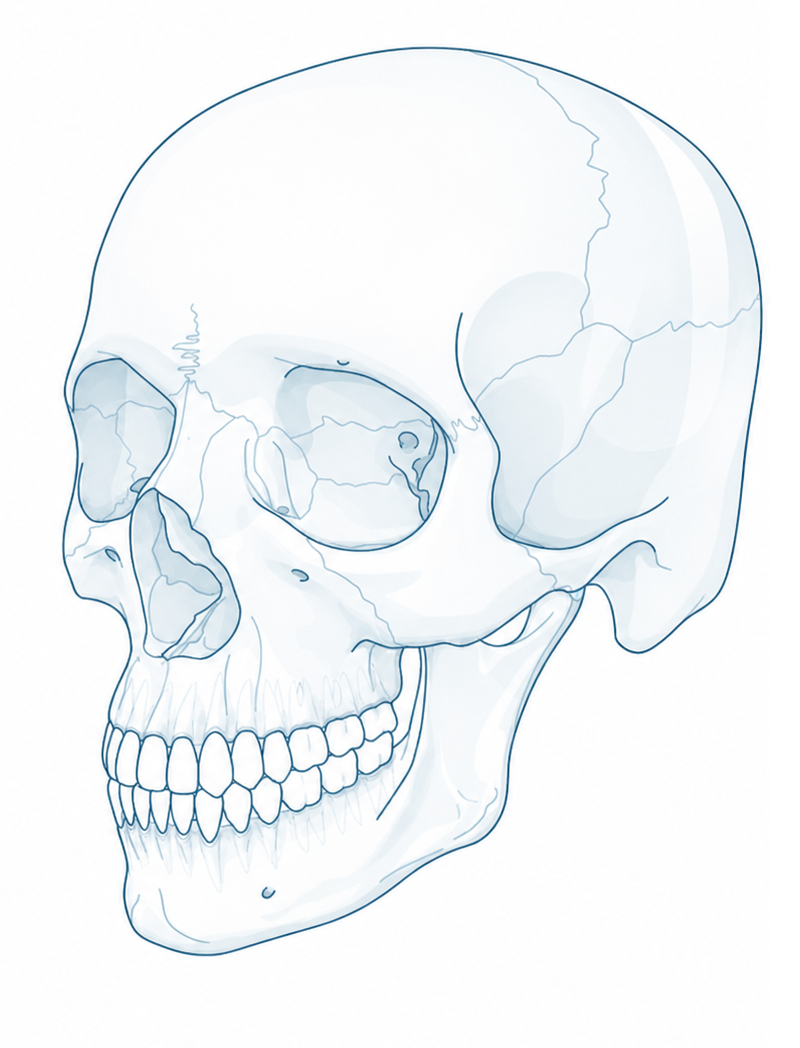
Lateral skull baseline before orthognathic surgical guide placement
Preoperative position (lateral view)
Lateral skull with patient specific orthognathic guide and fixation design
Custom Surgical Guides (lateral view)
Frontal skull baseline before orthognathic surgical guide placement
Preoperative position (frontal view)
Frontal skull with patient specific orthognathic guide and fixation design
Custom Surgical Guides (frontal view)
Mandible

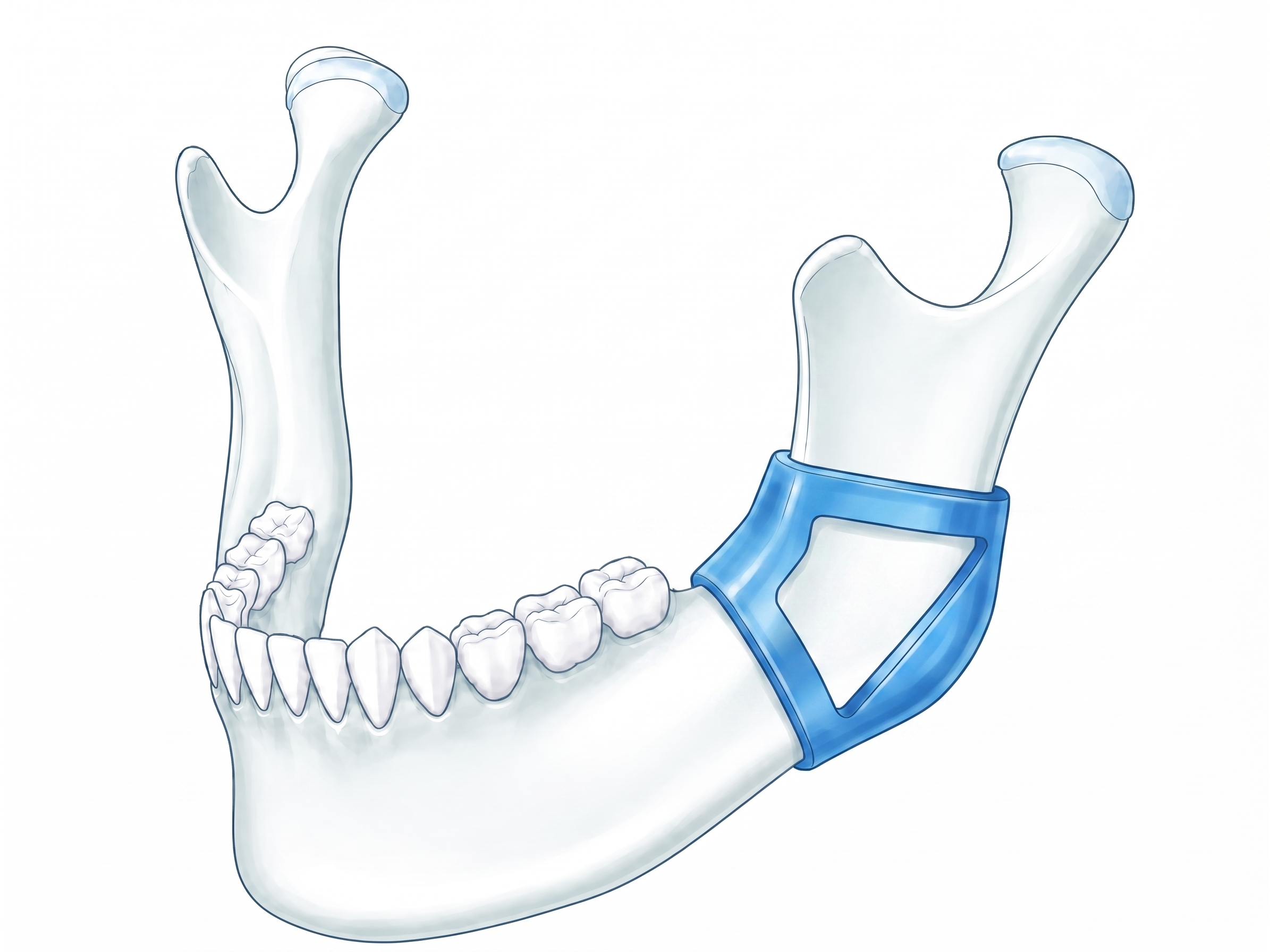
Mandibular angle guide

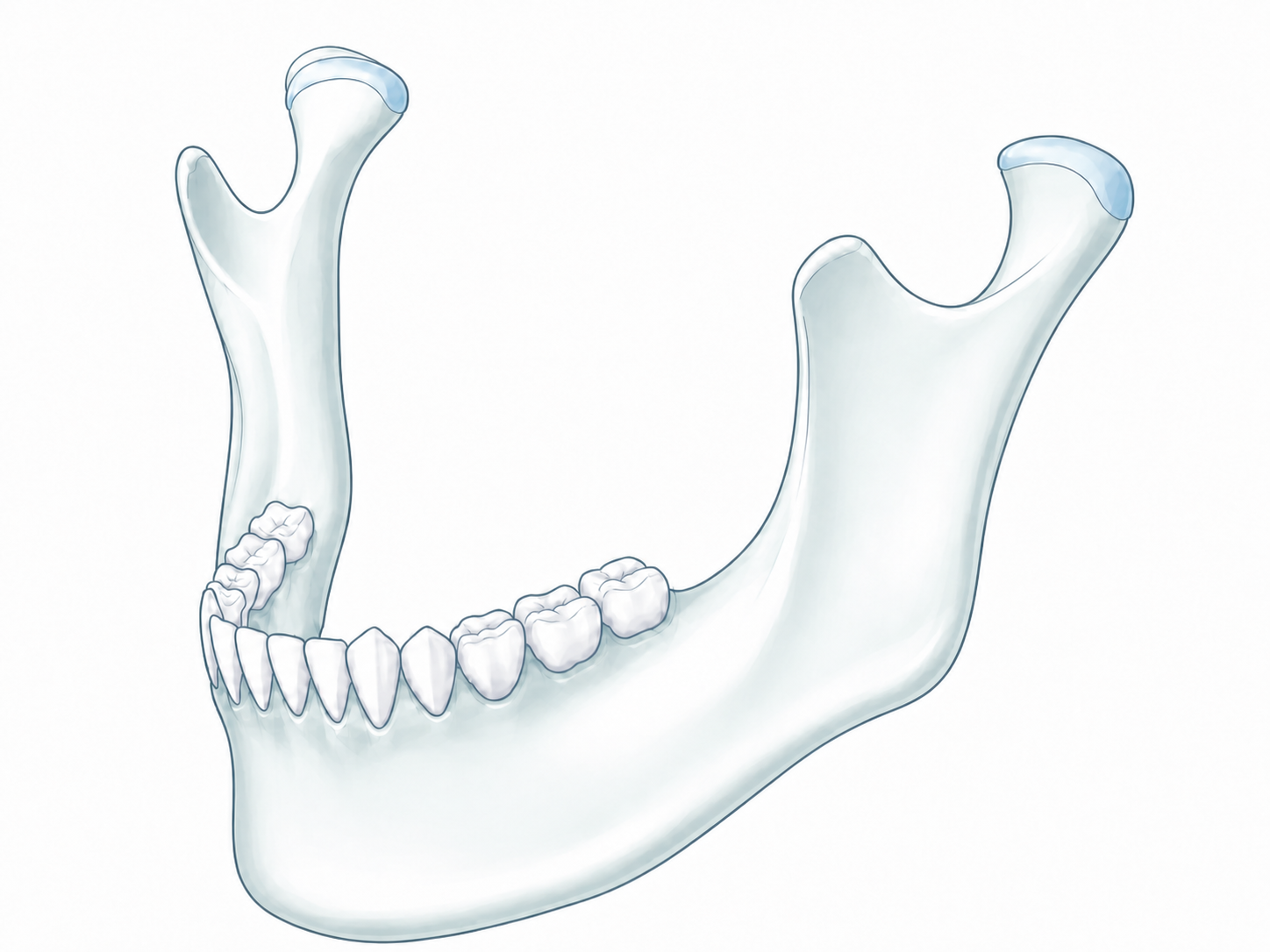
A mandibular guide can define the planned region, protect the intended contour, and provide reproducible intraoperative orientation on the mandibular body, angle, or ramus.

The design is adapted to the available exposure. Contact areas are selected where the guide can seat clearly and where soft tissue interference is limited.

Mandibular baseline anatomy before surgical guide placement
Preoperative position (frontal view)
Mandibular patient specific surgical guide design
Custom Surgical Guides (frontal view)
03 · Design logic

From Virtual Plan to Surgical Transfer

The digital design is checked from the surgical access, the seating surface, and the controlled element that must be transferred during the procedure.

Defined seating

The contact surface is selected so that the guide fits only in the planned position and can be verified visually during placement.

Controlled action

Slots, sleeves, and stops are placed according to the planned osteotomy, drill direction, implant position, or segment transfer.

Operative usability

The guide is reduced to the necessary geometry so that access, irrigation, handling, and fixation remain practical during surgery.

READY WHEN YOU ARE

Submit a case, receive a plan.

Send the patient's CT and dental scan through our secure channel. A planning proposal is typically returned within 2–5 working days, case-dependent.