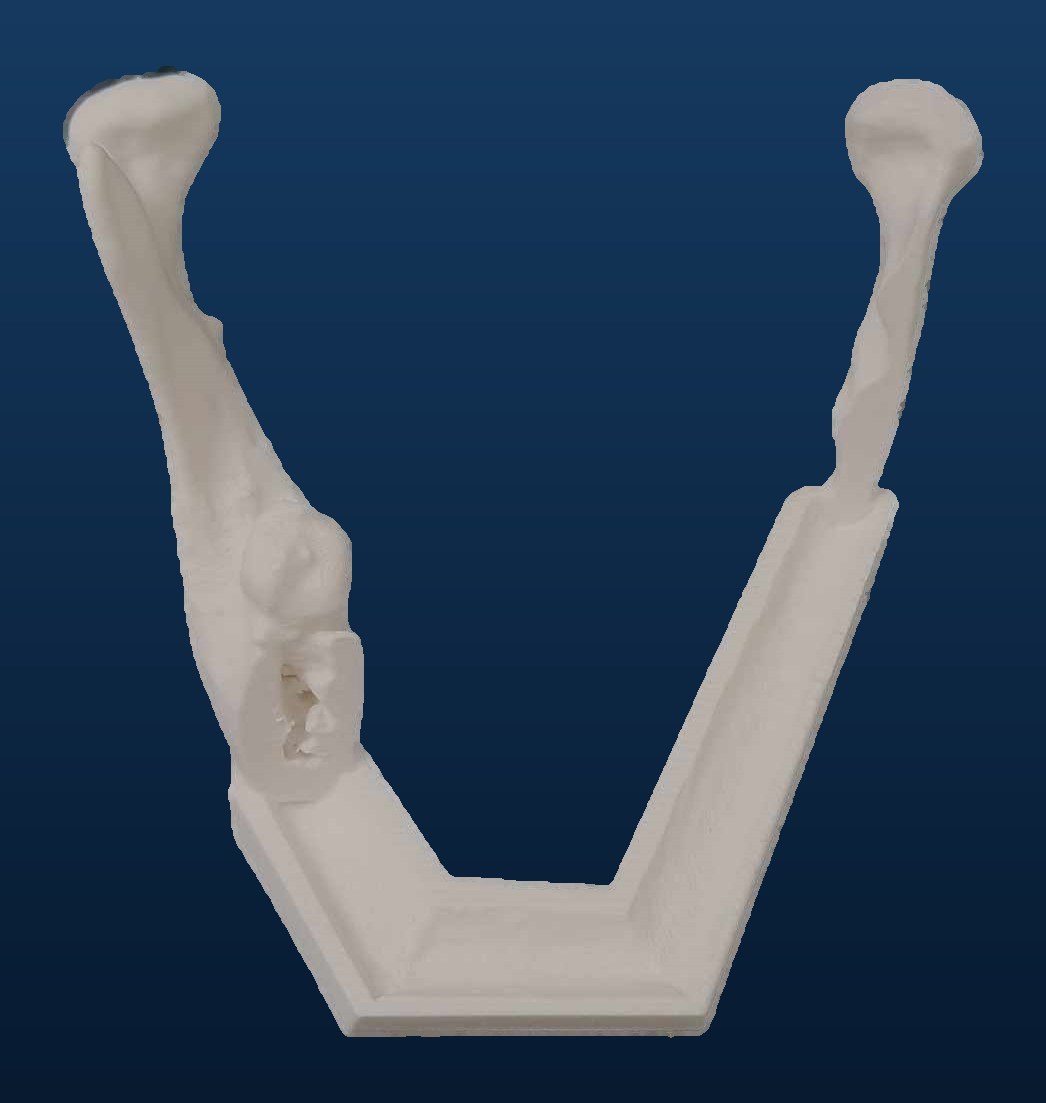
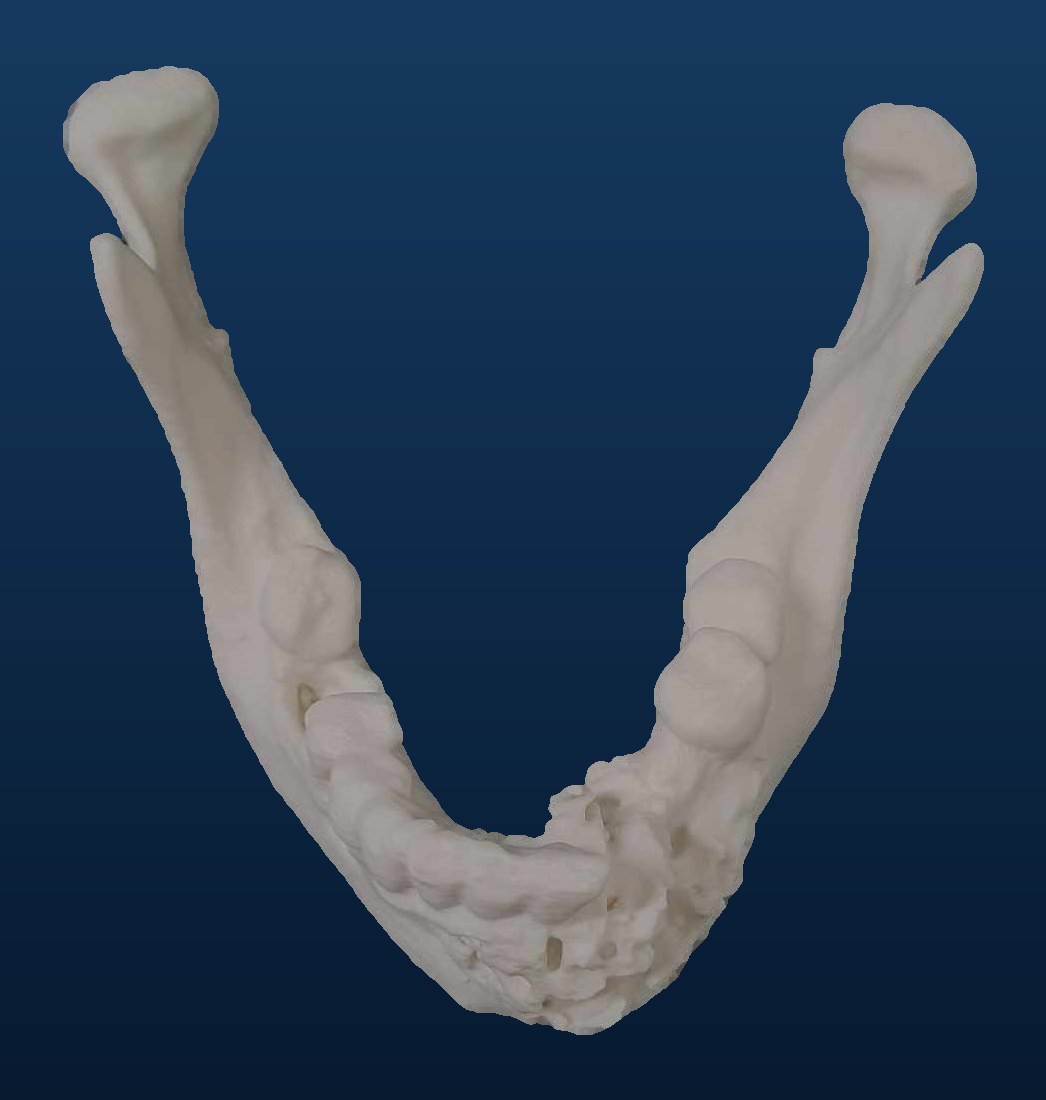
Virtual resection planning and fibula based mandibular reconstruction, from defect geometry to segment position, guide design, and final contour restoration.
Before you submit a case
Imaging & data requirements
How to acquire the CT/CBCT, dental and fibula donor imaging we need for accurate resection and reconstruction planning — our requirements from your side, on one printable sheet.
When a tumour is removed from the jaw, the missing bone is rebuilt, most often using a section of the patient's own fibula (the slender bone of the lower leg). We plan the removal and the rebuild together in 3D before the operation.
The native jaw defines the gap to fill, the fibula provides the bone, and the new contour is checked against the bite, facial symmetry, and jawline before anything is made, so the surgical concept reaches the operating room with clear references.
Planning variables
Resection
planes matched to the surgical margin concept
Segments
fibula osteotomies adapted to the mandibular arc
Contour
inferior border and angle continuity restored
Fixation
plate and screw positions coordinated with segments
Transfer
cutting guides and reconstruction references documented
02 · Fibula reconstruction
Mandibular Defect to Fibula Based Reconstruction
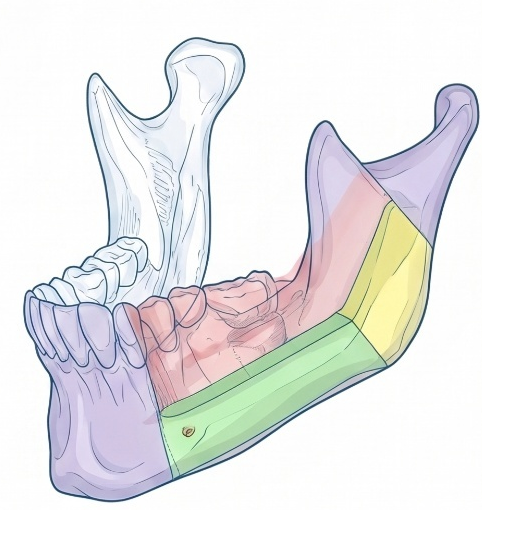
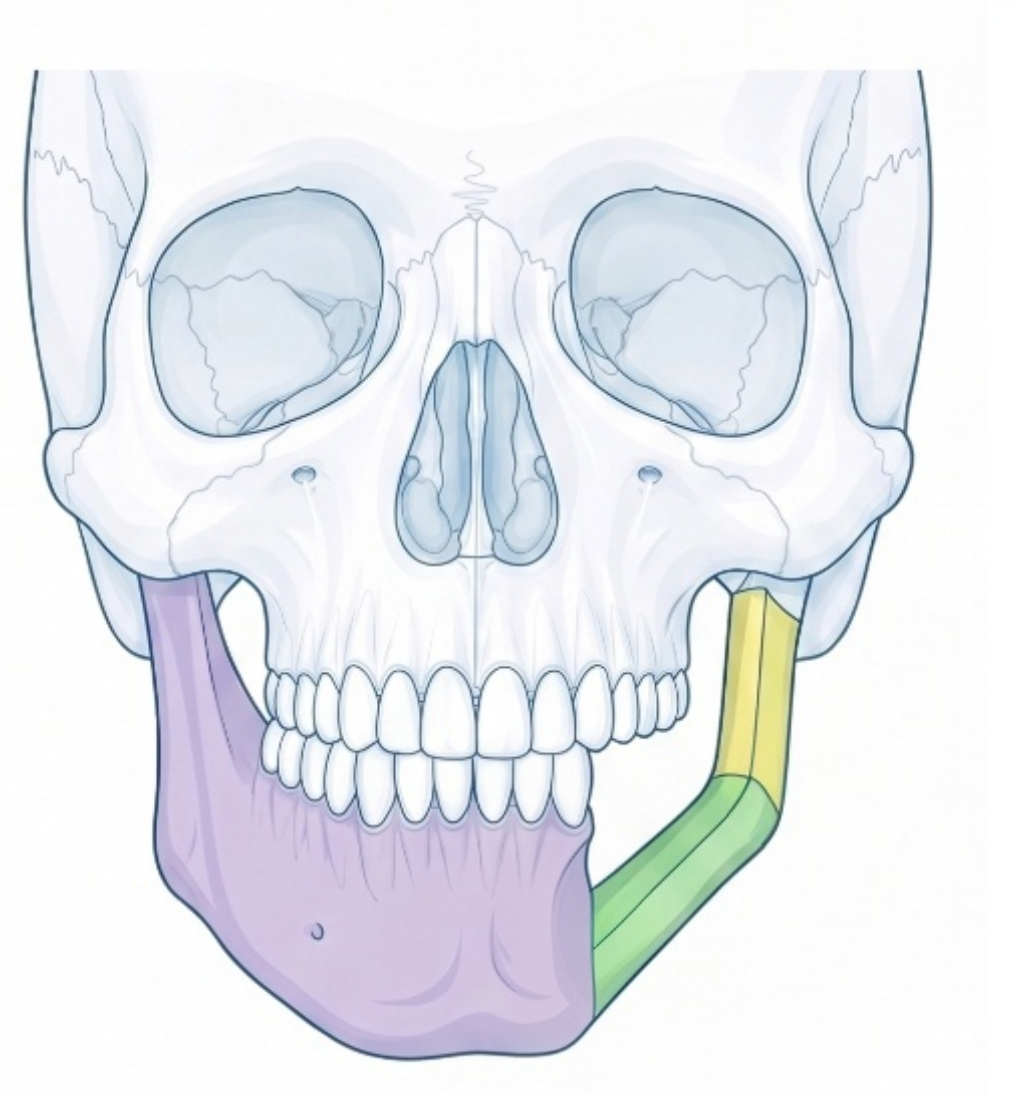
The reconstruction is planned from both sides of the problem. The mandibular defect defines the target shape, while the fibula is divided into segments that can reproduce the lower border, angle, and ramus contour.
Fibula free flap
Segmented mandibular reconstruction
The fibula is virtually osteotomized into planned segments and arranged to match the mandibular defect. Segment length, angulation, and final position are controlled in relation to the residual mandible.
The design should make the reconstruction understandable before surgery: where to cut, how to rotate each segment, and how the final mandibular contour should be restored.
Segment position on the mandible
Frontal contour restoration
Fibula donor segment plan
03 · Surgical transfer
From Virtual Resection to Intraoperative Geometry
A reconstruction plan becomes useful when each digital decision is translated into a guide, a surface, a screw corridor, or a sequence that can be repeated during surgery.
01
Defect definition
The mandibular defect and residual bone are evaluated so that resection planes and reconstruction endpoints are clear.
02
Donor segmentation
The fibula is divided into planned segments that reproduce the desired mandibular curvature.
03
Guide design
Separate cutting guides are made for the fibula and the mandible, plus a model of the planned jaw to check the final shape.
04
Plate planning
Fixation is coordinated with segment position, screw access, and the final reconstructed contour.
04 · Planning logic
Reconstruct the Mandible Around the Planned Contour
The final reconstruction is not only a bone transfer. It is a controlled geometric transfer from the virtual plan to the patient, with the occlusal plane, inferior border, ramus height, and facial symmetry kept in view.
Shaped to the jaw
The fibula is divided into pieces that recreate the natural curve of the jaw.
Guided cuts
Cutting guides seat on stable bone, so each cut lands in the planned position.
Restored contour
The rebuilt lower border and jaw angle are checked for symmetry.
From our cases
Mandible reconstruction with a fibula flap.
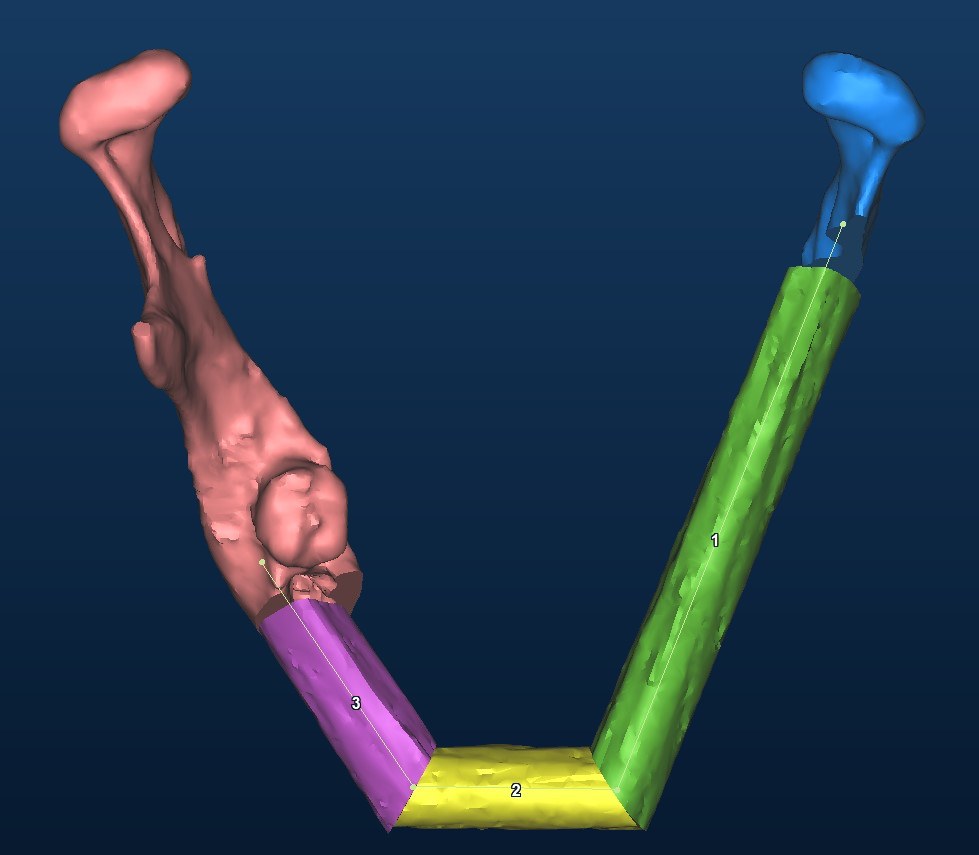
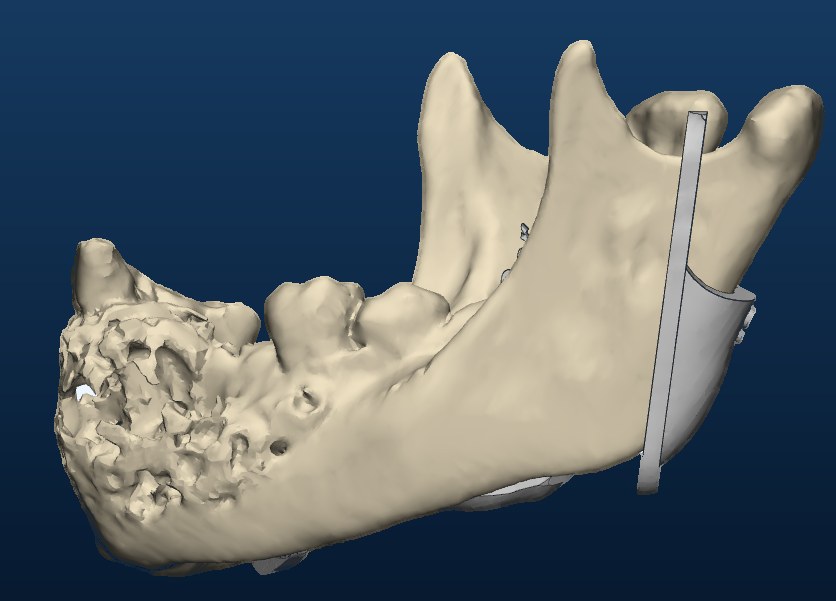
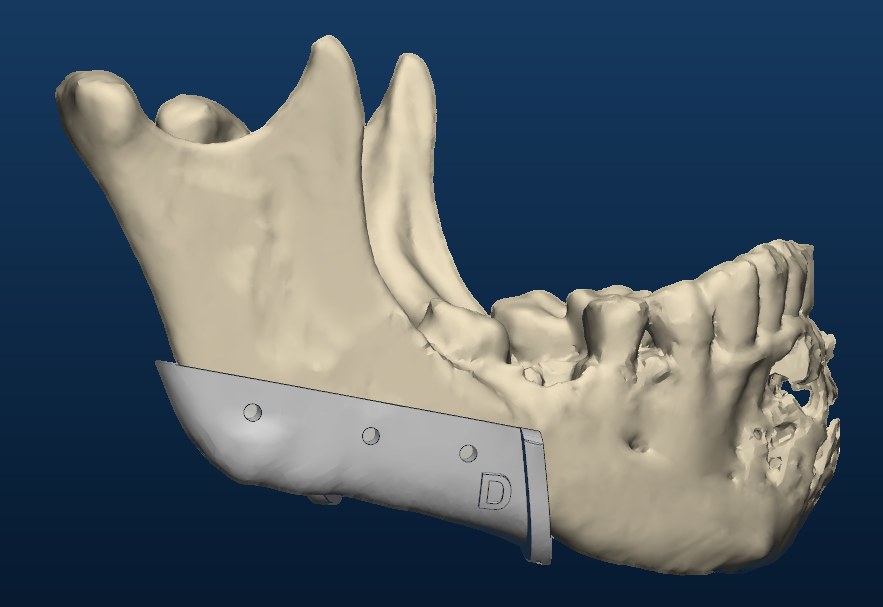
Resection of the mandible and reconstruction with a fibula free flap in three segments, planned by mirroring the healthy side.
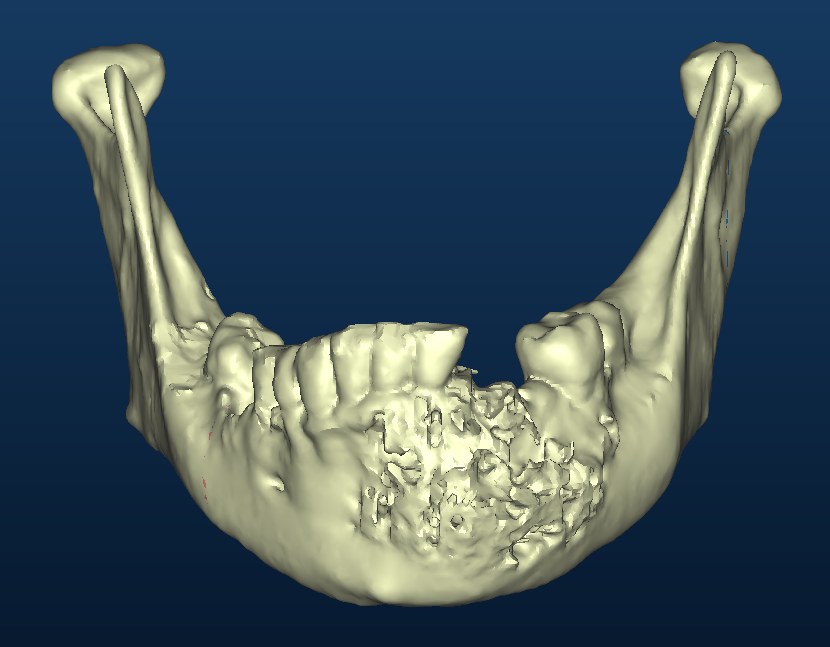
Initial situation
The plan: three fibula segments
Cutting guide, left
Cutting guide, right
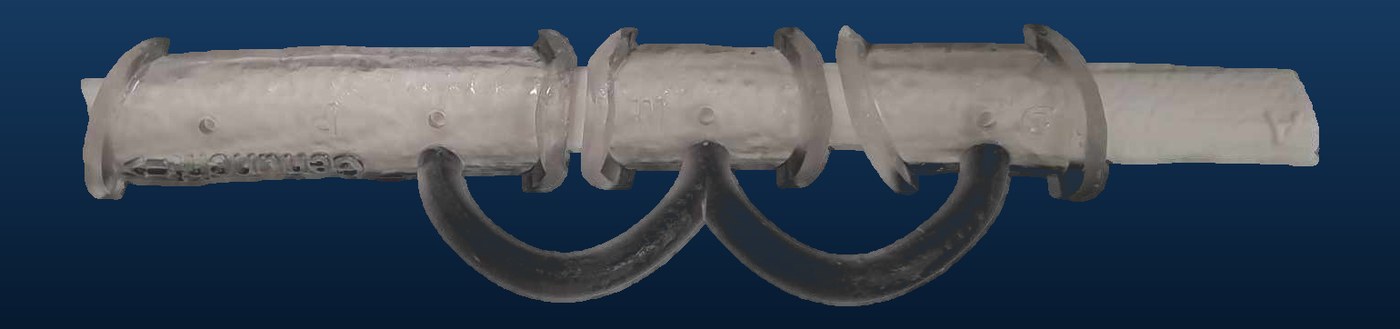
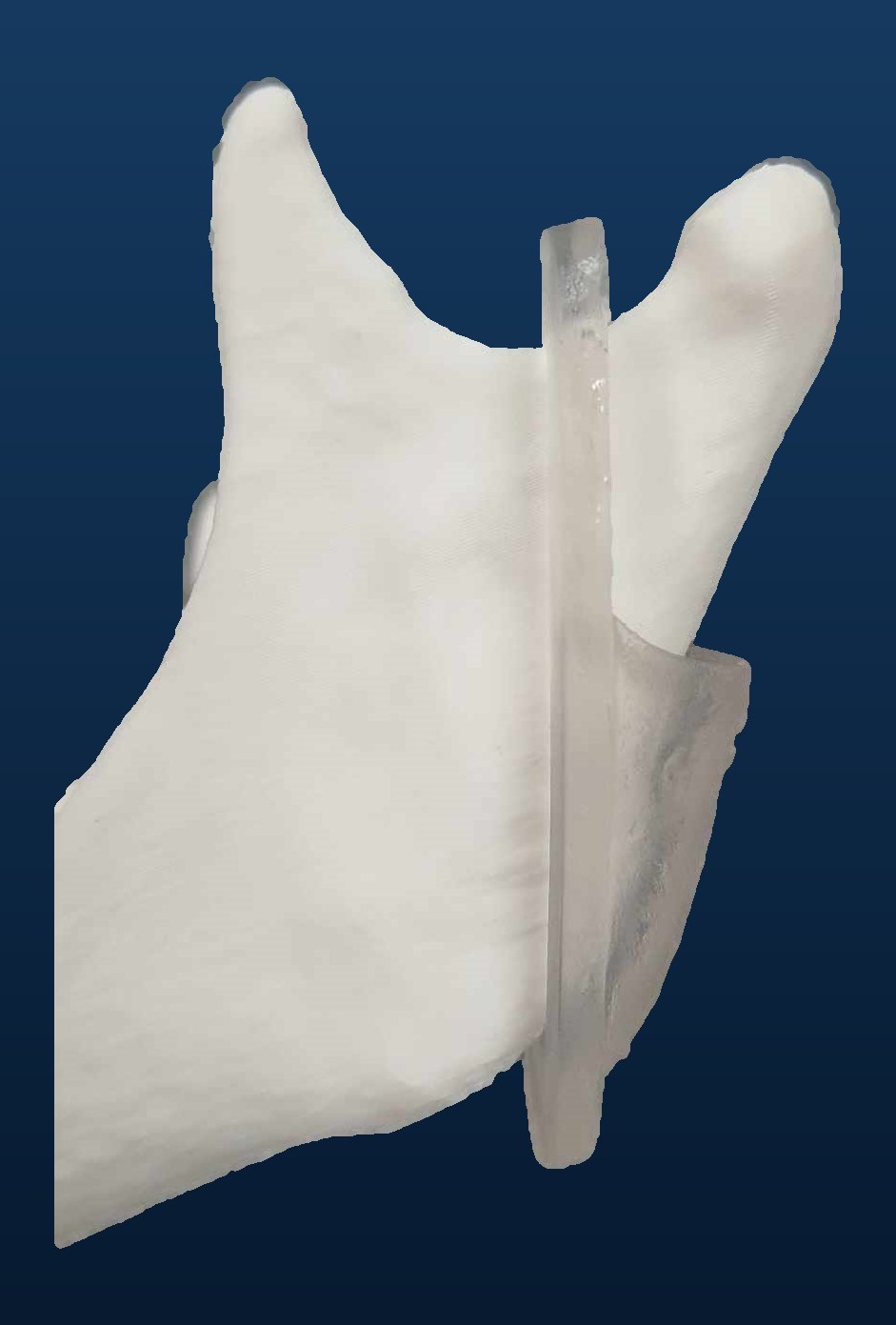
3D-printed guides and models
Fibula cutting guide
Guide seated on the model
Reconstruction model
Initial situation
Two cutting guides for the jaw, one for the fibula, and four printed models: one to test the fit, one to place the bone pieces, one to bend the plate before surgery, and one of the jaw as it was.
READY WHEN YOU ARE
Submit a case, receive a plan.
Send the patient's CT and dental scan through our secure channel. A planning proposal is typically returned within 2–5 working days, case-dependent.